Get Full Government Meeting Transcripts, Videos, & Alerts Forever!
Get email alerts on the Budget topic
No spam. Unsubscribe anytime.
Easton district financial update: fund balances healthy now, superintendent warns of statewide funding squeeze
Summary
The district reported cash reserves above its 20% minimum policy with reconciliation to county records, but the superintendent warned of systemic shortfalls statewide and urged attention to special education, transportation and MSOCs funding at the legislature.
The Easton School District reported a solid short-term financial position while the superintendent warned that structural funding challenges at the state level could pressure small districts in coming years.
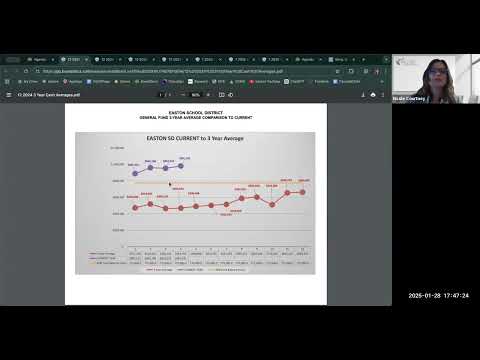
Nicole presented the district’s three-year cash graph and trial-balance figures (as of Dec. 31), reporting cash at about $981,181. The district’s ending fund balance stood roughly at $986,009 (about a 25% fund balance), which Nicole said is above the district’s 20% minimum fund-balance policy by about five percentage points. She said the general ledger trial balance reconciles with the Kittitas County treasurer’s report and that the district found no reconciliation issues for the month presented.
The superintendent said the district has received just over 50 strategic-plan survey responses and will present overall trends to the board next month. He then broadened the discussion to statewide finance: noting six districts currently in binding state oversight and dozens more near that status, he said three topics—special education, transportation, and MSOCs (materials, supplies and operating costs)—are the priorities local districts are asking the legislature to address.
Referencing the McCleary decision, the superintendent said K–12’s share of state operating funds has fallen from about 52% around McCleary to the low 40s in recent years, and he warned of speculative multi-billion-dollar shortfalls at the state level that could affect apportionment and district budgets if action is not taken. The superintendent characterized the problem as structural rather than local mismanagement: "It's a flaw in the funding system," he said.
On near-term finances, the finance presentation listed capital-projects and debt-service balances (capital projects fund ending balance about $567,765; ASB balance $26,862; transportation vehicle fund about $15,450), and the superintendent noted January apportionment adjustments will reflect actual enrollment changes.
Board members asked clarifying questions about percentages, apportionment mechanics and reporting; the district said it will continue to track legislative developments and update the board as bills move through the session.
The board took no formal fiscal action at this meeting beyond approving routine warrants on the consent agenda.