Get Full Government Meeting Transcripts, Videos, & Alerts Forever!
Get email alerts on the Special Education topic
No spam. Unsubscribe anytime.
Panelists in Edmonds webinar urge universal design, stronger transition supports for students with disabilities
Summary
Panelists in the Edmonds School District webinar “Nothing About Us Without Us” described personal experiences with IEPs and 504 plans, said assistive technology and family advocacy made critical differences, and urged schools to adopt universal design and better transition planning for college and adult services.
A panel of people with lived experience of disability told an Edmonds School District webinar audience on Wednesday that schools need to center universal design, destigmatize assistive technologies and strengthen transition supports so students with disabilities can thrive beyond high school.
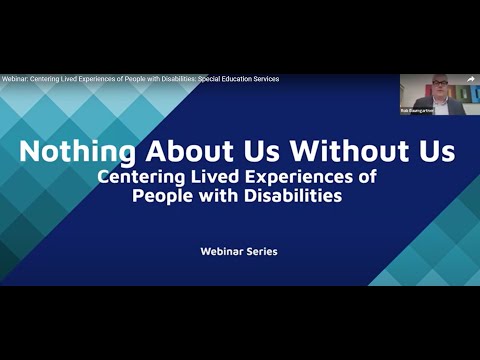
The webinar, the third in a district series called “Nothing About Us Without Us,” opened with a land acknowledgement and then moved to first-person accounts from panelists who grew up on individualized education programs (IEPs) or 504 plans. Elizabeth, a psychologist who said she grew up with spina bifida and used an IEP, described practical supports that mattered: “I had an IEP... my main needs were for accessible environment, bathroom breaks, and then support during medical leaves from school,” she said, and added that being connected to DVR in her senior year was “really helpful later on.”
Why it matters: panelists linked everyday classroom practices to long-term outcomes. They argued schools that default to pull-out services, or that leave essential accessibility work until after an individual student leaves, miss chances to teach students alongside peers and to build skills for independence.
Panelists gave concrete examples of effective practices and gaps. Anita, an elementary teacher who uses a manual wheelchair and said she had learning disabilities in school, praised teachers who pushed students and kept them in general education classes. “There were a few [teachers] that really challenged me. They’re the ones that I remember the most,” she said. Elisa Smith, a physical therapist who said she was diagnosed with autism as an adult, urged educators to harness students’ special interests as a bridge to learning: “If you can use that as a kind of... stepping stone to teach kids who are autistic all sorts of different topics... you’ll be amazed about how much they can learn.”
Panelists also described how technology changed educational access. Anita said a computer transformed her academic life: “A computer really changed my whole life academically.” Panelists listed technologies they rely on—screen readers, e-books, text-to-speech, speech-to-text and Chromebooks—and noted a persistent implementation gap when schools still require paper submissions or lack printing and sharing workflows to accept digital work.
Family advocacy and placement decisions came up repeatedly. Kristen, an occupational therapist and director of the Special Education Technology Center and a parent of neurodiverse children, described successfully advocating to keep her son in regular kindergarten rather than a self-contained classroom so he would access general-education curriculum and peer interaction. Kevin described how his mother wrote parts of his IEP and how that family advocacy taught him to advocate for himself later.
On the transition to postsecondary education, panelists said IEPs and 504 plans do not carry the same protections or automatic services into college; students must find and request accommodations. Elizabeth advised touring colleges’ disability services and learning what the school will actually provide before enrolling. Kevin recounted an accessibility mismatch at his college: “my college, the disability services was on the 2nd Floor with no elevator,” an anecdote panelists used to highlight campus planning oversights.
Panelists also warned that legal protections are under pressure nationally; Elizabeth said 504 plans face court challenges in some places and called for continued advocacy to keep those protections active. The webinar closed with the moderator thanking panelists and attendees and noting panelist bios and a link would be placed in the chat for viewers.
What’s next: the session ended without formal action; organizers said the recording would end and the webinar would be available for later viewing.