Get Full Government Meeting Transcripts, Videos, & Alerts Forever!
Get email alerts on the State Bonus topic
No spam. Unsubscribe anytime.
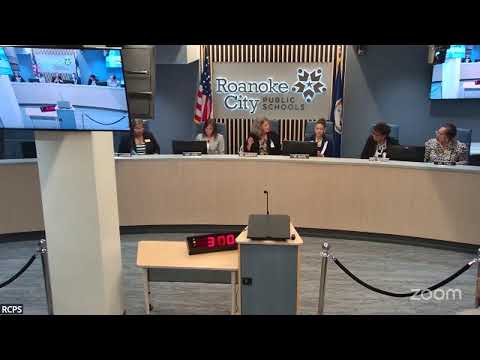
Roanoke board to distribute state bonus funds in two steps after heated debate
Summary
After public pressure and board discussion, Roanoke City Schools will distribute the state-funded portion of the $1,000-per-SOQ educator bonus by June 30 and consider a fall top-up if local funds allow. The board cited payroll timing and fairness across roles as constraints.
The Roanoke City School Board on June 10 agreed to move forward with issuing the state-funded portion of the Commonwealth’s $1,000 educator bonus and to reassess a supplemental payment this fall.
The decision followed nearly two hours of public comment and board discussion about whether the bonus — described in the state budget as $1,000 per Standards of Quality (SOQ) position — should be paid immediately or held as a retention incentive. Jordan Coleman, vice president of the Roanoke Education Association and an RCPS employee, told the board a prompt payment is critical: “A timely distribution of state funded bonus would help ease that financial burden and help some of our employees feel more valued,” he said during public comment.
Superintendent Dr. Andra White and Chief Financial Officer Kathleen Jackson explained constraints. Jackson said the state disbursement to Roanoke was just over $1.45 million and, given the division’s current staffing mix, that amount translates to roughly $555 per full-time employee if the funds are spread across eligible positions. Jackson also cited payroll logistics: the final paycheck for 10‑month employees falls in mid‑June and the payroll office is small, limiting how quickly an accurate, inclusive payment can be processed.
Dr. White described the policy choice the division faces: follow the state’s SOQ-based funding formula (which would require picking which positions qualify) or continue the district’s past practice of issuing division-wide bonuses to most employees. “We want to do right by our people, but we also have to be thoughtful and sustainable,” she said.
Board members repeatedly stressed the urgency for employees who rely on summer pay. Jill King, a teacher at Roanoke Academy, told the board that converting the bonus to a retention payment “feels like a breach of trust” for staff who budgeted to receive the money this summer. Several trustees said they preferred a two-part approach: distribute the state-funded portion as soon as feasible, then examine closeout numbers and consider adding local funds later to bring the total closer to $1,000.
The board directed administration to prepare for a June‑30 distribution of the state-funded portion, research any tax implications of a two-part payment, and return with logistics and, if needed, a recommendation for board action to authorize any reallocation of budget categories. Jackson said staff would begin processing the state funds and would notify the board if unexpected legal or fiscal obstacles arise.
The matter remains procedural rather than a formal policy change; trustees said they expect to revisit a supplemental payment in the fall after fiscal year closeout and audit processes clarify available local funds.
What happens next: administration will assess payroll logistics and tax treatment, and the board will consider a fall vote if additional local funds can safely be allocated to increase the payout.