Get Full Government Meeting Transcripts, Videos, & Alerts Forever!
Get email alerts on the Budget Deficit topic
No spam. Unsubscribe anytime.
RCPS projects about $16.5 million shortfall; board weighs contingency, personnel review as parents plead to save PLATO
Summary
Roanoke City Public Schools officials told the board Feb. 10 that preliminary FY2026–27 information shows roughly a $16.5 million deficit; administrators proposed non‑personnel reductions, a $1.3 million contingency and objective criteria for staff decisions. Several parents and students urged the board not to cut the PLATO program.
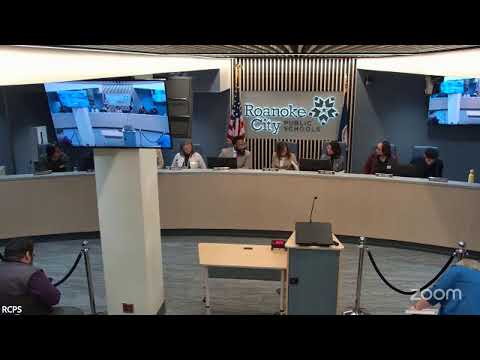
Roanoke City Public Schools officials on Feb. 10 told the school board they are projecting roughly a $16,500,000 deficit for the FY2026–27 budget and outlined a mixture of savings, targeted cuts and a proposed $1,300,000 contingency to reduce risk.
CFO Kathleen Jackson said modest revenue increases from the state and city — about $1 million so far — were outweighed by rising personnel costs, including a 2% raise that the draft budget includes because partial state funding is available, higher health‑care costs estimated at about 10% (roughly $1.3 million), and special education and other demand‑driven expenses. "So that got us to where we are at this moment, of a $16,500,000 deficit projection," Jackson said.
Jackson described several offsets and programmatic changes under consideration: a recent state textbook grant for math; reallocating certain positions into CEIS portions of IDEA funds (about $630,000 of favorable variance); an anticipated utilities shortfall of just over $200,000; and proposed non‑personnel reductions that together would net a few million dollars. She also proposed a $1.3 million contingency — about 0.5% of the projected budget — because the division no longer has the fund‑balance cushion it previously maintained.
The board pressed on whether a half‑percent contingency is sufficient. Trustees recalled that the district previously maintained a fund balance of about $12–$13 million to address year‑end overruns and noted health care and utility costs can be volatile. Several members said the proposed contingency "doesn't feel like enough of a cushion" given that change in the city's school‑funding policy.
Because roughly 75% of the district's costs are personnel, the board also heard from Chief Human Resources Officer Dominic McKay about an objective process to evaluate positions. McKay listed five criteria the division will use to review positions for 2026–27: whether the position is vacant or likely to be vacant; the funding source (general fund vs. grant); whether the position exceeds standards of quality; whether it is a hard‑to‑staff subject; and whether it is mission‑critical based on student achievement and the strategic plan. He also outlined an expedited timeline for approving reappointment lists and issuing contracts in late March and early April if the board adopts preliminary budget categories on March 10.
Public commenters used the budget hearing to press for alternatives to cuts. Derek Kachnis, a resident active in workforce and housing efforts, emphasized external funding opportunities and programmatic innovations such as VDOE guidance on seat‑time flexibility that could expand capacity for CTE programs. "Seat time flexibility is a major, major innovation," he said.
Families and students made direct pleas to preserve PLATO, the district’s program identified repeatedly in public comments. Third‑grader Jackson Gunter described his experience in PLATO and asked the board and city council not to cut its funding: "Please let me and my friends at least finish elementary school in PLATO." His mother, Brianna Gunter, said abrupt closures would cause lasting academic and social harm and urged leaders to avoid making permanent decisions based on temporary numbers.
Board members did not take final budget votes; the board will consider a preliminary budget approval on March 10 that must be sent to city council by March 15 under the city charter. Administrators said they will continue to refine revenue estimates as the General Assembly posts budget details (budget 'Sunday' expected Feb. 22) and will bring updates back to the board at upcoming work sessions.
What happens next: the board is scheduled to consider preliminary budget categories March 10; the public may continue to submit written budget comments through Feb. 13 (the feedback form remains on the RCPS website).