Get Full Government Meeting Transcripts, Videos, & Alerts Forever!
Get email alerts on the Zoning Density topic
No spam. Unsubscribe anytime.
Planning commission backs changing multi‑family density to 15–20 units per net acre
Summary
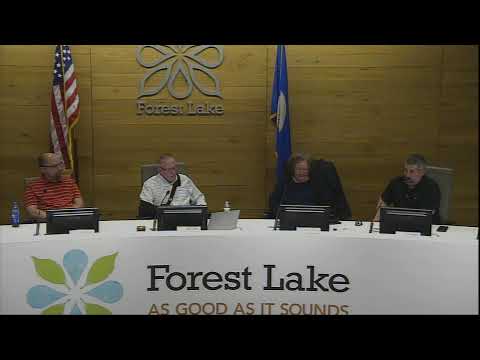
The Forest Lake City Planning Commission recommended that the City Council adopt an amendment to the MF (multi‑family) zoning standard to state a minimum density of 15 units and a maximum of 20 units per net acre, noting the move aligns the zoning code with the comprehensive plan; the commission will forward the recommendation to council on March 10.
The Forest Lake City Planning Commission voted to recommend that the City Council adopt an amendment revising the multiple‑family density standard to a range of 15 to 20 units per net acre.
Planning staff member Ken told commissioners the proposed ordinance would change the current code, which reads as a “maximum density of 15 units per net acre,” so it mirrors the comprehensive plan’s intent for a 15–20 units per acre range. “It would say…minimum density of 15 units per net acre and a maximum density of 20 units per net acre,” Ken said during the presentation.
Commissioners questioned how the change would apply on the ground. One commissioner raised concerns that the comprehensive plan language he was reading from the packet showed a single number of 15 and asked whether different districts or map definitions explained the discrepancy. Ken and staff replied that the comprehensive plan’s residential category was intended as a range and that the amendment is intended to make code and plan consistent.
Members also asked about building height and likely parcels that would be affected; staff reminded the commission that existing zoning allows multi‑family buildings up to four stories or 45 feet, with only limited circumstances for a partially below‑grade level to create additional stories. Staff noted a handful of potentially developable parcels—one near 202nd/61 and a few others—and said development feasibility varies by site constraints such as wetlands and road access.
No members of the public spoke at the public hearing. After discussion commissioners closed the hearing and approved a motion to recommend the ordinance change; staff said the recommendation will go to City Council on March 10.
The commission’s action is advisory only; final adoption would be by the City Council at a later meeting.