Get Full Government Meeting Transcripts, Videos, & Alerts Forever!
Get email alerts on the School Presentation topic
No spam. Unsubscribe anytime.
Pomel Elementary showcases student achievements and outlines plan to boost attendance
Summary
School staff highlighted student competition wins, new enrichment and autism programming, and persistent attendance problems — about 90.3% — that the communities-and-school team said they are addressing with tiered interventions and community supports.
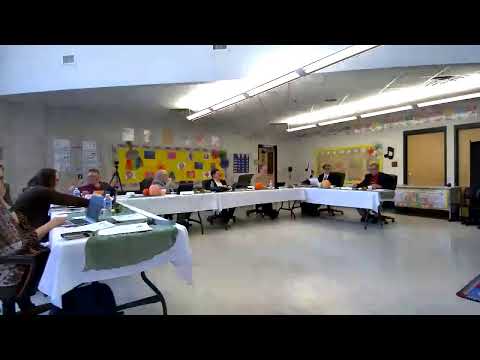
Pomel Elementary staff on Friday presented student work, extracurricular successes and schoolwide supports during a Local School Improvement Council showcase attended by board members. LSIC chair Savannah Hall and school leaders praised teachers and community partners and described a split of instructional priorities and student supports.
"They go above and beyond for every kid here," said Savannah Hall, the LSIC chair, praising staff engagement and community volunteers who helped run a trunk-or-treat and other events. Presenters highlighted three kindergarten students who competed in a regional fair, noting two kindergarten winners at the regional leadership competition and additional successes in reading and art contests.
School presenters turned to academic data as benchmark 1 results were reviewed. The school reported steady growth over the last three years and said it met annual targets in reading and math. Still, presenters identified phonics (K–3) and informational-text vocabulary as priority instructional areas to target through PLC (professional learning community) collaboration.
"We're always ready, after benchmark 1 to collaborate, get together, dive deep into that data and figure out where our weaknesses are," a data lead said, noting cross-grade PLC work and plans to integrate vocabulary instruction into science and social studies.
Student support staff flagged attendance as the school's largest current challenge. Jack Chambers, identified in the presentation as the communities-and-school facilitator, said the school’s attendance rate was roughly 90.26% — below the 95% threshold the presenters said is needed to reach the “green” category on internal scorecards — and described a tiered response system. "Tier 1" includes schoolwide incentives (weekly rewards and bulletin boards); "Tier 2" and "Tier 3" involve targeted family interventions, home visits and community referrals when chronic absenteeism persists.
The presenters also described community-driven supports: Mountain Heart delivered turkeys and holiday meal boxes for preschool families, volunteers organized a coat drive and costume distribution, and a Safe Haven program provided other assistance. Staff said these partnerships are central to meeting students’ basic needs and improving school engagement.
The school noted enrollment and staffing details in its packet: about 288 students, roughly 23 professional staff at the classroom level, and approximately 55 total staff including support personnel; the school also reported adding a classroom for students with autism. Presenters asked the board to continue backing counseling and CIS (community-in-school) supports, arguing those services make classroom instruction more effective.
Board members applauded the student performance and commended staff, with one member saying the school’s "happy kids" and strong engagement were visible upon entering the building. The presentation closed with staff and board leaders emphasizing continued collaboration among teachers, parents and community partners.
The board took no formal action during the presentation portion; the meeting resumed regular business after the showcase.