Get Full Government Meeting Transcripts, Videos, & Alerts Forever!
Get email alerts on the School Funding topic
No spam. Unsubscribe anytime.
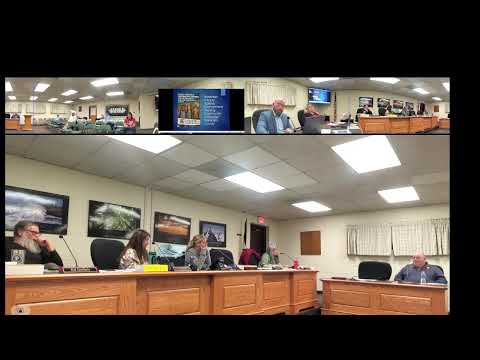
Randolph County Schools board reviews bonds and levies, considers CTE expansions and November timing
Summary
At a July work session, board members and staff reviewed how bonds (capital) and excess levies (operations) differ, discussed past levy/bond experience and accounting, and explored adding career-technical education projects to a potential November ballot while planning community surveys and transparency measures.
Daniels, who opened the presentation, told the board that “the school bond is basically used for construction or renovations,” and contrasted that with an excess levy that funds recurring operational needs such as nurses, social workers and transportation.
Brad explained the mechanics and history: the district’s previous levy began 07/01/2011 and ran through 06/30/2016, and he described how levy money was tracked by account codes and allocated per student. “What I gave you tonight is a copy of the levy that passed in 2010. It started, went into effect 07/01/2011, and it ran through 06/30/2016,” Brad said, noting the intensive annual reporting and audit steps required to ensure levy and bond spending match the call.
Board members emphasized basic legal and procedural constraints. Daniels reminded the group that school measures in West Virginia require only a simple majority — “50% plus 1” — and that recent changes require bonds and levies to appear on a regular primary or general election ballot rather than in a special election.
The group discussed scale and possible projects. Brad recounted a past bond design that included a $13.5 million local ask paired with roughly $9.2 million in School Building Authority (SBA) funding — about $22 million in total — to fund items such as HVAC upgrades and additions at multiple schools. Members and residents said some earlier projects did not occur because votes failed or because priorities shifted.
John, who discussed technical-center proposals, told the board that the district previously applied to the SBA (in 2021) for roughly $4.7 million to add three high-level shops and an early childhood classroom and to fund safety features such as a sprinkler system and a man trap. “We submitted to the SBA to add 3 high level shops and an early childhood development classroom... it was like 4,700,000.0,” John said, and he warned that some CTE programs—welding in particular—have notable ongoing costs (ventilation, filtration, electricity).
Members weighed outreach and equity issues. Residents and trustees raised concerns about tax-class differences (class 2/3/4 property) and reassessment effects that can change individual tax bills; one resident suggested pursuing a local revenue option such as a luxury or occupancy ‘‘penny’’ tax but acknowledged that changing property-class treatment would require state legislative action. Brad provided a historical levy revenue breakdown (about $2.8 million total: roughly $700,000 from class 2; $1.6 million from class 3; and ~$1.0 million from class 4) to help target outreach.
The board agreed on next steps if it pursues a November ballot: develop community surveys and targeted meetings, assemble a clear project list, prepare a timeline and cost estimates, decide reporting cadence for transparency (quarterly or annual), and gather past documentation and voter breakdowns. Daniels said launching preparations in December–January would give about a year to ready a November measure; Brad noted statutory milestones and potential SBA steps that could affect schedule and scope.
No bond or levy was formally proposed or voted on at the meeting. The chair closed the work session after assigning staff follow-ups on cost estimates, prior files and survey tools; members moved to adjourn and the work session ended at 06:48.