Get Full Government Meeting Transcripts, Videos, & Alerts Forever!
Get email alerts on the School Finance topic
No spam. Unsubscribe anytime.
State legislators urge overhaul of school aid formula, warn of PEIA and special‑education funding gaps
Summary
Visiting state legislators told the Fayette County Board of Education that the state aid formula needs updating to better fund special‑education, transportation and other mandates; county staff and legislators also warned that PEIA premium increases and shrinking federal grants could blunt local pay‑raise efforts.
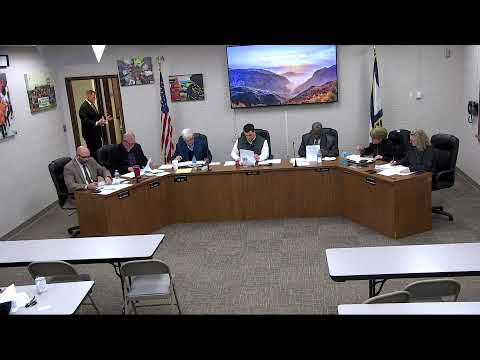
At a Fayette County Board of Education meeting, state legislators and county education officials urged changes to the state school aid formula and warned that health‑insurance and federal grant changes could reduce the net effect of any local pay raises.
The board’s guests included Sen. Brian Helton, Del. Elliot Prit and Sen. Roland Roberts, who described plans in Charleston to take up a ‘‘fair state aid formula’’ and other bills aimed at accounting for the higher costs of special‑needs students, transportation and other mandated services. ‘‘The state aid formula has not been updated in a number of years,’’ one legislator said, urging the board to share data and local priorities as committees draft bills.
Paula Fridley, the county chief school business officer, told the board that ‘‘most of the positions within the school system, if you make changes to the pay scales for both the professional and the service, most of the positions in the school system will receive that benefit of that raise also,’’ but she cautioned that contracted coordinators and some stipend roles may not see the same direct increases. Fridley also warned that federal grants tied to student counts are shrinking and can force reductions in grant‑funded positions.
Speakers said special‑education needs have grown—Fridley and others put the county’s IEP share in the low‑to‑mid‑20 percent range—and stressed that the formula must better reflect those costs. Legislators described a pilot idea, variously called a ‘‘comprehensive student and family support’’ program or ‘‘Star Academy,’’ that would centralize services for students with acute needs as a way to improve outcomes and reduce classroom disruption.
Multiple speakers raised a second funding risk: rising PEIA premiums. One attendee said the federal government was signaling cuts that ‘‘get ready for a 20% reduction,’’ and several people warned that if pay raises push employees into higher PEIA contribution brackets, insurance cost increases can offset or eliminate the benefit of raises.
Speakers also flagged school‑choice and transcript parity issues: county staff and legislators urged the state to consider clearer rules for accepting homeschool transcripts and differentiating diploma types so that returning homeschool students do not produce distortions in class GPA or scholarship eligibility. One county presenter said a recent homeschooling transcript in another county had been ‘‘written on a paper bag,’’ highlighting the administrative challenges.
Why it matters: Fayette County officials told legislators the county has invested in early‑grade supports and mental‑health partnerships and that without a formula update and attention to health‑insurance thresholds, local improvements could be undercut by state and federal policy changes. The board asked the visiting legislators for follow‑up: staff agreed to provide lists showing which positions are funded by excess levies versus state aid and to accept emailed questions so legislators can shape bills with local detail.
Next steps: Legislators said the formula and related measures will be priorities during the coming 60‑day session; the board asked staff to compile the requested documentation and to accept a promised email packet of draft bills from legislative offices.