Get Full Government Meeting Transcripts, Videos, & Alerts Forever!
Get email alerts on the Classroom Observations topic
No spam. Unsubscribe anytime.
Platteville School District reviews "rounding" classroom visits to sharpen instruction, track safety
Summary
The district’s program committee reviewed a 9-week "rounding" pilot of classroom visits designed to boost instructional presence, discussed changes to observation forms and phone-tracking metrics, noted improved door-locking for safety, and agreed to try coordinated scheduling and revisit the program in March.
The Platteville School District’s program committee spent its meeting reviewing a districtwide "rounding" program of short classroom observations intended to increase instructional presence and inform coaching for teachers. Chair opened the discussion by calling the rounding report the meeting’s "primary conversation for us tonight."
The committee heard that rounding was piloted in nine-week cycles. "From the start, it was, let's try this for 9 weeks knowing that this is going to be [rough]," the Chair said, adding the intent was to build a habit the district could refine over the school year. Staff and committee members said the first nine weeks used broad questions while the second nine weeks tightened focus at the building level and in student services based on staff feedback.
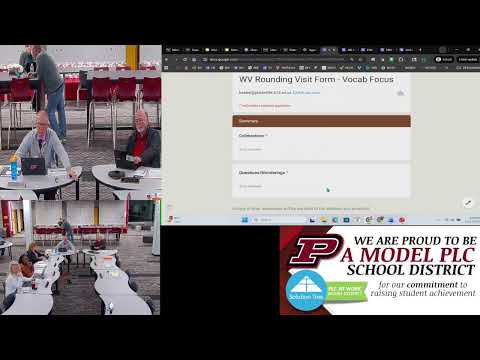
Staff described the data-collection changes the district has made. Committee members reported access problems for the first-quarter forms but confirmed second-quarter links were available. A staff member explained the district is moving away from editable PDFs toward linked forms and pointed to a preview feature that shows how the form will appear. On reporting, the high school form moved from raw classroom counts to percentage bands ("100%", "75–99%", "51–74%", "below 50%"), which staff said "simplifies it so it's a lot easier to look at trends and sorting."
Several staff members and committee members raised concerns about how rounding feels to teachers. "One of the concerns from our staff was that this feels like a checklist," the Chair said, and the committee agreed that if the second nine weeks continue to feel checklist-like they will examine why and adjust the approach. Committee members encouraged invitations from teachers to observe lessons at the start of new activities so observers can support improvement rather than only document performance.
The report also captured school-safety observations. The Chair described a notable effect of the rounding work: classroom doors have been locked more consistently. "Every time [the safety team] present, they say in a school, the best way to save students' lives is to have a locked door in your classroom," the Chair said, adding that many classrooms visited had locked doors.
At the elementary level, presenters described narrowing the observation focus to align with recent instruction priorities. A presenter said the district’s elementary rounds emphasize the science of reading and intentional vocabulary instruction, reflecting training under Act 20 and Guiding Coalition recommendations: "Our focus is on the science of reading...we decided to narrow it down to just vocabulary to start with."
Operational changes were also discussed. Committee members and staff acknowledged past occasions when multiple observers entered the same classroom within a short period. The Chair said the leadership team will try coordinating rounding visits at their next meeting to avoid clustered drop-ins and to better match observations to instructional time. The committee agreed to revisit the rounding program in March to assess whether the changes improve usefulness for teachers.
There were no formal motions or votes recorded on the rounding report during the session. The meeting adjourned at 06:47 PM.