Get Full Government Meeting Transcripts, Videos, & Alerts Forever!
Get email alerts on the State Report Card topic
No spam. Unsubscribe anytime.
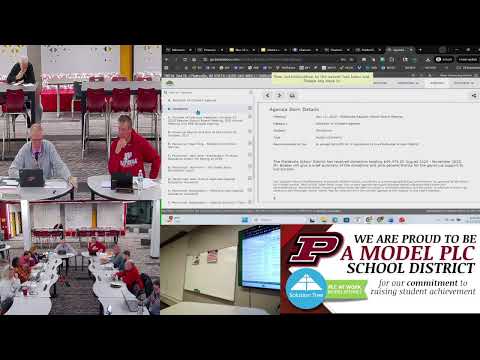
Platteville district highlights gains on state report card; trustees flag middle-school math for added support
Summary
The Platteville School District board heard a state report-card presentation showing high test participation and multi-year growth that moved several buildings into 'exceeds expectations.' Trustees and staff identified middle-school math as an area needing targeted interventions and described plans—vertical collaboration, double-dose supports and data monitoring—to address it.
Platteville School District trustees on Tuesday reviewed newly released state report-card data that the district said show multi-year academic growth and very high test participation.
Brad, the presenter, told the board district participation rates were 98.1% in ELA and 98% in math and said several buildings moved into ‘exceeds expectations’ on multi-year measures. “We’ve gone from meets expectations to exceeds expectations at the district level, high school and middle school,” he said, and emphasized the district will continue to monitor subgroup trends and refine supports.
Why it matters: the state’s accountability cut points changed this year, and the district said those changes affected reported scores; staff also explained how districts with higher percentages of economically disadvantaged students weight growth differently—when the disadvantaged percentage exceeds 35%, growth is more heavily weighted than raw achievement scores.
Trustees pressed staff about subgroup results and an apparent outlier on a composite scale (one group showed an unusually high numeric value). Brad said subgroup calculations and changes in cut points can create such effects in charted displays and reiterated that the district will keep presenting multi-year trends to provide context.
A key area of concern was middle-school math. Trustees and staff discussed system changes made last year—shifting fifth grade to a self-contained model to reduce transition shocks—and noted the district will continue to track whether that approach improves outcomes when three-year data are available. Staff described additional steps including protected weekly professional learning community time, expanded vertical collaboration across grade bands, a ‘double dose’ block at the middle school for students who need extra support, and tiered interventions during pride/bridal time.
Special-education staff and data teams described how they will measure progress. “Our goal is to get to grade level by the end of the school year,” said Sarah Coir, the district’s special-education teacher, describing AIMSweb progress monitoring used for tier 3 students.
Next steps: staff said they will develop action plans from the fall staff check-in and continue to present disaggregated data to the board so trustees can track whether the district’s strategies narrow gaps in middle-school math and other subgroups.