Get Full Government Meeting Transcripts, Videos, & Alerts Forever!
Get email alerts on the Budget Levy topic
No spam. Unsubscribe anytime.
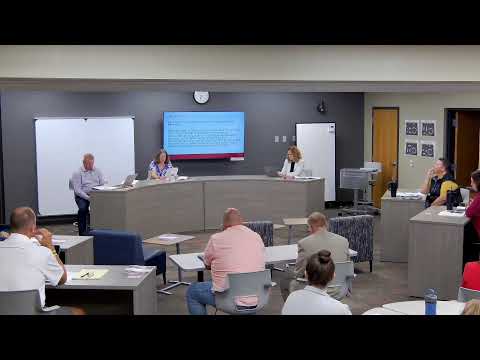
Pulaski electors approve $21.66 million tax levy after budget hearing
Summary
After a public hearing on the proposed 2024–25 budget, electors of the Pulaski Community School District approved a $21,658,812 tax levy. District staff outlined revenues, special-education pressures and capital projects; residents asked questions about SRO cost sharing, pool funding and transportation costs.
Pulaski Community School District electors voted to levy $21,658,812 to operate and maintain the district for the 2024–25 fiscal year after a public hearing on the proposed budget.
The chair read the resolution authorizing the levy and called for a motion; the motion to adopt the levy was moved and seconded and carried on a voice vote. The chair said the vote implements the district’s proposed budget for the coming fiscal year.
At the meeting the superintendent, identified in the agenda as Mrs. Case, reviewed accomplishments and facilities work across the district before turning the presentation over to Mark Logan, the director of business services, who laid out the financials. Logan said projected total revenues are just over $55,000,000 and that roughly 14.1% of the general fund comes from property taxes. He noted the district remains in year two of a five‑year operational referendum, which yields about $1,600,000 that is being applied to staff compensation.
Logan described major expenditure drivers: "About 75% of our budget is spent on people," he said, and noted the district approved a 4% wage increase this summer and is estimating roughly a 2% rise in health‑insurance costs while the district transitions to self‑insurance. On special education he said rising enrollment is increasing costs and that the state reimbursement rate is about 30% under current law.
The director also explained levy mechanics and offered an illustrative mill rate: "If nothing changes," he said, the district’s mill rate would be about 6.9, which is flat with last year in the district’s projection. He cautioned that final figures depend on the district’s third‑Friday pupil count and October 1 property values.
Residents asked detailed questions during the public‑comment portion. Donna Severson said prior requests for transportation and pool budget details had gone unanswered: "Last year at the budget hearing… I had asked for information and I never received any response at all," she said. Logan replied that he had sent emails and other records, advised making an open‑records request for missing materials, and offered to follow up with contract details. On SRO funding Logan described the Pulaski–Hobart contract as a multi‑year step‑down and said Pulaski’s share is currently much larger than Hobart’s, with Hobart counted at approximately a 50/50 share; he said he would confirm exact percentages and provide the contract as a follow‑up.
On the community pool Severson asked about a $52,000 line item; Logan said the district allocates staffing and coordinator time across school, community and summer‑school uses and charges community hours to the community fund. On transportation he provided a high‑level per‑pupil cost estimate of about $700 based on fleet and staffing costs divided by pupils transported and said the district could prepare a per‑mile analysis on request.
Logan also reminded the meeting that federal ESSER funds are ending and that roughly $189,000 of ESSER-related spending is being used this year, which will not be available in subsequent budget years.
The chair closed the hearing and read the formal levy resolution; after a motion and a second the levy was approved by voice vote. The director reiterated that the budget is based on assumptions and will be finalized once the state revenue‑limit notification (third‑Friday count and October property values) is complete.
The meeting then moved on to a series of routine resolutions and to adjournment.