Get Full Government Meeting Transcripts, Videos, & Alerts Forever!
Get email alerts on the Referendum Survey topic
No spam. Unsubscribe anytime.
Consultant: survey shows $1.3M-per-year, five-year referendum most likely to pass; board to draft resolution
Summary
A consultant told the Viroqua Area School District board that a recent survey of about 870 respondents found a $1.3 million-per-year, five-year operational referendum would likely clear a majority (about 58.7% support) while a $1.5 million option would not; board members directed staff to draft resolution language at the August meeting to allow a possible November ballot placement.
A consultant presenting referendum survey results to the Viroqua Area School District board said the firm collected about 870 responses and that the district’s best option for a five-year operational referendum is a $1.3 million-per-year measure. The presenter said, "you do cross 50% plus 1 at 1,300,000.0 per year," and that a $1.5 million-per-year option "is not gonna be supported by your voters."
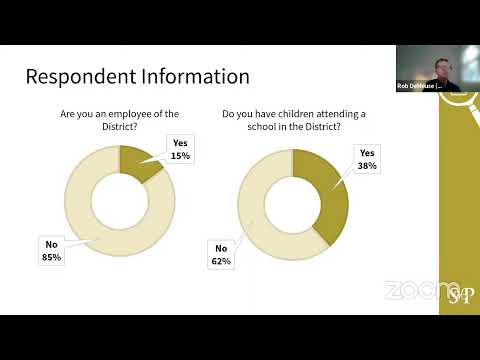
The presenter told the board the survey closed July 17, that the district’s response rate exceeded the firm’s 15–17% average, and estimated the survey’s margin of error at about ±3.5 percentage points. He explained the results are weighted across three groups—staff, parents and non-parents/non-staff—and noted non-parents/non-staff constituted about 70% of respondents, which strongly influences an overall outcome.
Why it matters: the district’s existing operational referendum is set to expire next year and the board is considering whether to ask voters for additional recurring levy authority to fund operations. The consultant said the $1.3M option would likely achieve a majority on election day (an estimated 58.7% support), whereas the higher $1.5M option drew only about one-third support in the survey.
Board discussion focused on timing, voter outreach and financial mechanics. Members asked whether short-term economic events, state aid changes or one-time arbitrage dollars could materially change the outcome; the presenter cautioned such factors can move sentiment but said the near-term timeline (with a potential November referendum) makes the current data a useful predictor. The board discussed posting the full survey and recording to the district referendum web page and preserving outreach lists that increased response.
On next steps, multiple board members said staff (including Beth and Chris) would draft resolution language in time for the August meeting so the board could formally consider placing a referendum on the November ballot if it chooses. That direction was described as preparatory: no formal referendum resolution was adopted during this meeting.
The presentation included other findings relevant to proposal design: respondents rated priorities that the district should avoid cutting (class sizes, academic programs and building maintenance), the district’s net recommender score rose modestly from about 6.9 to 6.98 since the last survey, and the consultant said the district’s increase in positive scores is a favorable sign for passage.
Two procedural votes at the meeting were recorded: the board voted to confirm the meeting’s public notice and later voted to adjourn. The consultant, board and staff agreed to continue refining financial details and the communication plan in advance of the August meeting.