Get Full Government Meeting Transcripts, Videos, & Alerts Forever!
Get email alerts on the Curriculum Instruction topic
No spam. Unsubscribe anytime.
Principals tell Vermilion board new reading curriculum, teacher training and instructional rounds aim to boost student engagement
Summary
Principals reported that teachers completed science-of-reading training, new tier‑1 curriculum was adopted to accelerate decoding/fluency, comprehension strategies and instructional rounds were used to measure engagement; MAP results were not yet available.
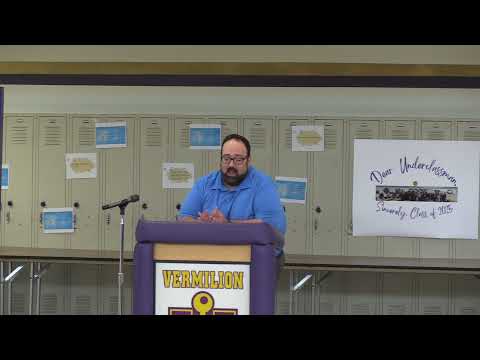
Principals presenting to the Vermilion Local School District board on May 12 described district work this year to strengthen curriculum, teacher practice and student engagement.
The principals said the district adopted a more rigorous grade‑level curriculum intended to move foundational decoding and reading skills earlier in students' courses of study. They described work to use common assessments and item analysis so teachers can identify which standards and specific test items students struggle with and adjust instruction accordingly.
A central effort was completing the state's required "science of reading" training. One presenter said all teachers completed required training pathways (a mix of courses, Wilson/Keys or district‑paid programs) and that administrators collected completion certificates via a Google form. Teachers also created a bank of comprehension strategies and are using progress monitoring (Acadience) every two weeks for tier‑2 students.
Instructional rounds were used this year to observe classrooms and gather evidence of three priorities (engagement, use of learning intentions, and responsive instruction). The presenter said classroom observations indicate improvements: district literacy practices observed rose from about 45% in October to 65% as of early May.
On student engagement, a presenter offered the board the district's rewritten definition: "Student engagement is the active involvement of all students in the learning process marked by elements such as active listening, collaboration, and genuine discourse." The presenter said the district will continue implementation and refine strategies in 2025–26.
Board members praised the work and noted staffing and cultural shifts that supported the changes. A board member remarked the district will miss departing instructional leader Jen and applauded her classroom‑observation work.
Presenters said MAP testing (NWEA) was underway and that complete MAP results were not yet available; they said they expected to analyze the data and use it to target supports. No formal board action was taken on curriculum reports; the presentations were received as informational items.