Get Full Government Meeting Transcripts, Videos, & Alerts Forever!
Get email alerts on the State Legislation topic
No spam. Unsubscribe anytime.
Board member warns new state education bills could reduce local control and reshape classroom requirements
Summary
A board member summarized recently passed or pending state bills — the Baby Olivia Act, a Success Sequence proposal, and a partisan school-board elections bill — warning they prescribe classroom content, could stigmatize some students and limit district decision-making; the board member also gave an EdChoice lawsuit update.
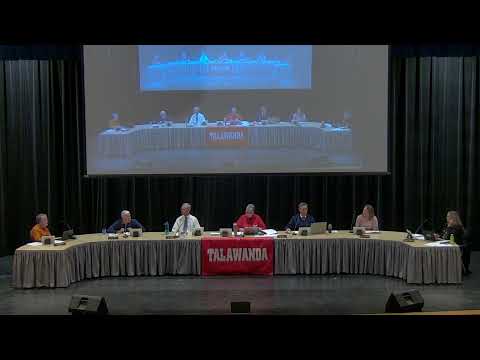
A board member (Speaker 1) opened the meeting's summary of state-level education activity by describing several bills that, if enacted or upheld, could change classroom content and district authority. He described the Baby Olivia Act — which he said would require public schools to show students in grades 5–12 an annually repeated video about fetal development produced by an anti-abortion organization — and warned families in Talawanda City that the requirement would begin in the 2026–27 school year unless the legislature or courts act.
He also described a Senate-passed "Success Sequence" bill that would require instruction telling students that to avoid poverty they should graduate high school, obtain full-time employment and marry before having children; he said the bill would insert that sequence as a graduation requirement for sixth and twelfth grades. "This curriculum would be telling kids from single parent homes...that there's only 1 right way," he said, adding concern about potential shaming of students in diverse family circumstances.
On school board governance, the board member described a partisan-election bill that would place party labels on school-board ballots; he said he personally is less concerned because it might make candidates' positions clearer, but he warned of the risk that races could become straight-ticket contests. He also reported a status update on the EdChoice voucher constitutional challenge: a Franklin County judge ruled against EdChoice but the program continues while the state appeals and the case moves toward the Ohio Supreme Court.
The board member concluded by urging residents to contact state legislators with their views and offering to speak with any community members who want more information.