Get Full Government Meeting Transcripts, Videos, & Alerts Forever!
Get email alerts on the Levy topic
No spam. Unsubscribe anytime.
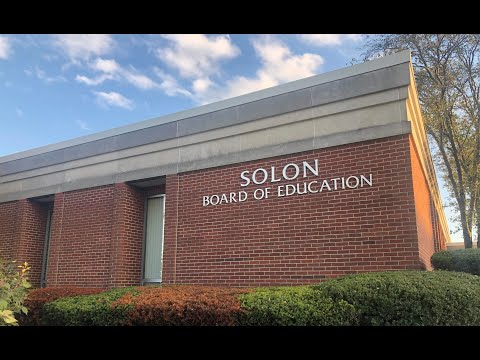
Solon City Board discusses placing 6.9-mill operating levy on May 5 ballot
Summary
At its Jan. 26 meeting the Solon City Board of Education introduced a resolution to submit a 6.9-mill operating levy to the May 5 ballot, citing projected budget shortfalls and low state funding per pupil; the motion was moved and seconded but a final vote was not recorded in the transcript.
The Solon City Board of Education on Jan. 26 introduced a resolution to place a 6.9-mill operating levy on the May 5, 2026 ballot, citing state funding shortfalls and a district budget forecast showing a future unencumbered deficit.
The presiding officer read the resolution, which the board described as the second step needed to ask voters to approve the levy under sections 5705.3 and 5705.21 of the revised code. A motion to approve placing the levy on the ballot was moved and seconded during the meeting; the transcript records discussion in support of the measure but does not record a final roll-call outcome for that resolution.
Superintendent Mister Mullen and the district treasurer outlined the rationale for asking voters to approve the levy. Mullen said schools are “the primary reason why people come to our community” and argued the district must maintain current service levels. The treasurer said state and federal funding combined left the district toward the low end of per-pupil funding statewide and cited a public FY05 CUP report as a data source for comparisons. The treasurer also told the board the district’s forecast shows an approaching unencumbered deficit “of almost $17,000,000” within a few years and said that, given those projections, timely action is needed to avoid service reductions.
Officials explained the mechanics of effective millage: a voted millage can generate the same dollar amount over time even as property values rise, meaning the effective tax rate declines unless additional levies are approved. The superintendent said district leaders will hold community outreach in coming months to explain how the levy would work and why the board is recommending it.
What happens next: the board introduced the resolution and discussed the levy during the meeting. The transcript records the motion and a second but does not record a subsequent roll-call vote or final adoption; the board indicated the levy would appear on the May 5 ballot if the resolution is adopted. Further votes, outreach details and the district’s formal levy language are expected to appear on the board’s agenda or public materials before the ballot certification deadline.
Authorities cited in the meeting included sections 5705.3 and 5705.21 of the revised code.