
HUD proposes new rule to expand Moving to Work flexibilities and launches 'Work and Dignity' coalition in Champaign
Get AI-powered insights, summaries, and transcripts
Subscribe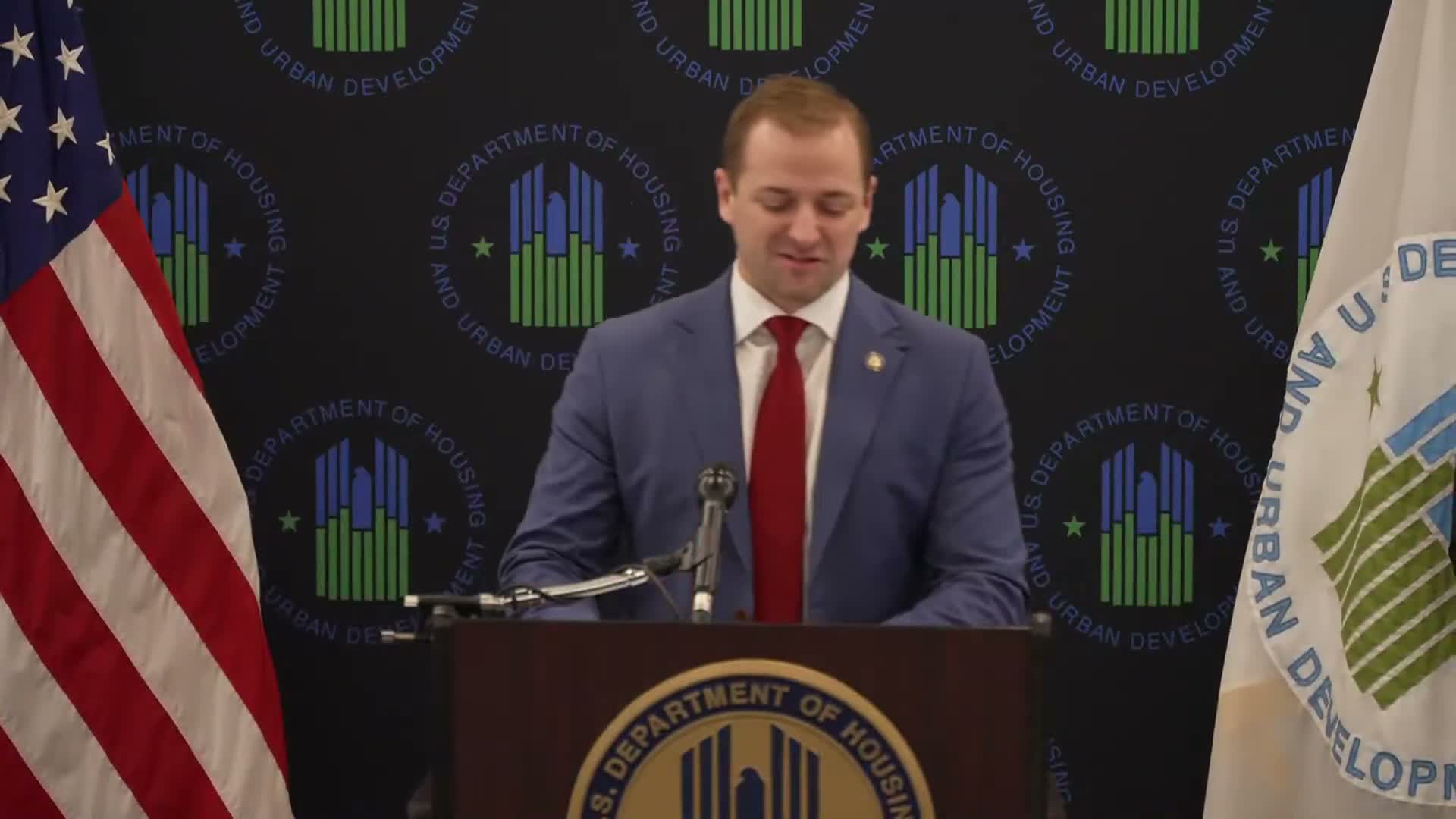
Summary
HUD Secretary Scott Turner announced a proposed rule to allow public housing agencies and owners to adopt work requirements (up to 40 hours/week) and time limits (two years or more) for able-bodied adults, and announced a voluntary Work and Dignity Coalition; local participants offered testimonies of MTW success.
HUD Secretary Scott Turner and Assistant Secretary Benjamin Hobbs visited Champaign, Illinois, to announce a proposed rule that would give public housing agencies (PHAs) and owners broader flexibility to implement work requirements and time limits for able-bodied adults receiving housing assistance.
At the Housing Authority of Champaign County event, Assistant Secretary Benjamin Hobbs described Champaign as a “national leader” in the Moving to Work (MTW) program and credited the agency’s mix of supportive services and work expectations with sharp local gains: “Since 2014, Champaign County public housing residents have watched their average household incomes rise by 96%,” Hobbs said, adding that nearly 1,100 families have left HUD assistance since 2014.
Secretary Scott Turner outlined the core elements of the proposal, saying it would allow PHAs and owners to set work requirements of up to 40 hours per week and time limits of two years or more for able-bodied adults. “Work requirements and time limits are not punishment,” Turner said. “They’re some of the best ways to restore dignity and the opportunity.” He framed the change as a way to free assistance capacity for families with the greatest need and estimated the proposal could mean “up to 51,000,000 in increased income across our country.” Turner said the rule would apply only to able-bodied adults and insisted it would not affect seniors or children.
Local residents who participate in MTW programs described personal progress tied to supportive services. Alkeila Irvin said she joined the program in 2016 and worked with local staff and partners to meet program expectations; she said that support helped her increase earnings and ultimately become a homeowner in 2024. “They led me and gave me those pathways to to become a homeowner, and I’m forever grateful,” Irvin said. Shaundry Johnson, a participant since about 2021, said program resources helped her return to school and enroll her son in summer enrichment programs; she said she is meeting with a mortgage lender next week to begin homeownership steps.
Jacqueline Vincent, executive director of the Vermilion Housing Authority, told attendees Vermilion plans to pursue similar flexibilities if the rule moves forward. Turner named Champaign and Vermilion as the first two PHAs to join HUD’s newly announced Work and Dignity Coalition, a voluntary partnership of PHAs, owners, tribes and states that support work requirements and time limits.
Officials took questions about how local PHAs would set and tailor requirements. Hobbs said the proposal is intended to give local agencies flexibility: work-hour and time-limit details would be set by participating PHAs and owners to reflect local labor markets and community partnerships. Turner said the proposal will go through the federal notice-and-comment process; HUD will respond to public comments before setting a final effective date.
The announcement did not include a final rule or an implementation timeline. Turner and Hobbs asked stakeholders to submit comments during the rulemaking period and emphasized that the proposal is intended to be optional and locally tailored rather than a federal mandate.