
House Transportation Committee begins markup of 2027 T bill, approves technical fixes and emergency contracting changes
Get AI-powered insights, summaries, and transcripts
Subscribe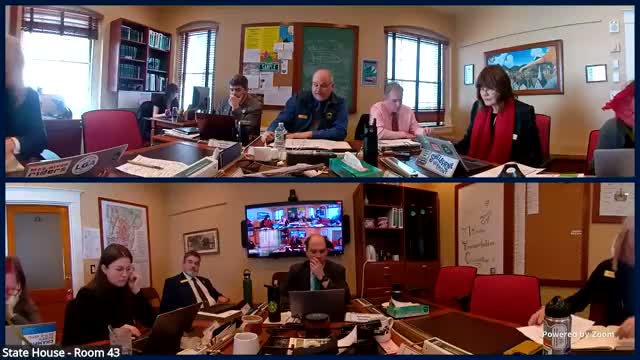
Summary
During Feb. 27 markup, the House Transportation Committee reviewed the 2027 T bill draft, agreeing to repeal obsolete loan‑fund rules, clarify road‑design language to allow lower posted speeds with warnings, raise the contract bond‑waiver threshold to $250,000 (and allow emergency waivers), add federal bridge‑inspection compliance and a civil posting penalty, and instruct counsel to add Caledonia Airport language.
Montpelier — The House Transportation Committee on Feb. 27 began formal markup of the 2027 transportation (T) bill, checking off standard program text and approving several technical and policy changes that could affect municipal loans, contracting in emergencies and bridge safety.
“For the record, I’m Damien Leonard from the Office of Legislative Counsel,” Leonard said as he opened the committee’s line‑by‑line review and walked members through a draft that initially uses last year’s definitions as placeholders pending a later review.
The committee agreed to add cleanup language to repeal obsolete Transportation Board rules that still reference administration of a municipal equipment and vehicle loan fund. Leonard said the fund itself will remain and continue to be administered by the Treasurer’s Office; the draft only removes outdated rules that no longer reflect current administration.
On road design, the draft replaces language requiring agencies to “develop and implement” standards with a provision to “maintain state standards and guidance.” Leonard said the change clarifies that engineers may specify lower posted speeds at constrained locations — for example, sharp curves or school crossings — using appropriate warning signs, without requiring a formal design exception. Members asked whether the change applies only to roads off the National Highway System; Leonard said it applies to projects not on the National Highway System and that the mechanics for setting speed zones remain governed by Title 23.
The draft also raises a contracting surety threshold and adds emergency authority. Leonard described a proposal to give the secretary of transportation discretion to waive bonding requirements for contracts of $250,000 or less (up from $100,000) and to waive bonding during declared emergency events for immediate temporary stabilization work related to public safety or state infrastructure. Leonard said the agency’s intent is to speed response during major events when it may deploy many contractors and immediate work cannot await bond procurement.
On bridge policy, members approved a new section aligning state practice with the federal National Bridge Inspection Standards. The draft requires the Agency of Transportation to inspect bridges on state and town highways, notify municipalities of deficiencies, and — when there is an imminent hazard — authorize the agency to immediately post or close a bridge. Municipalities would be responsible for costs on municipally maintained bridges, and the draft adds a civil penalty of up to $1,000 for violating a posting or closure.
Committee members repeatedly emphasized the limits of municipal authority and asked for clarification on enforcement, penalty levels and how civil fines would be collected. Leonard noted that civil penalties must be proportional to the offense and that enforcement of unpaid civil penalties would proceed through court action.
The committee also reviewed a series of other drafting items: updates to traffic‑violation cross‑references, proposed membership changes to the Public Transit Advisory Council to add private intercity bus operators in place of a long‑vacant taxi seat, and a request from AOT to extend the public–private partnership sunset from 2026 to 2029 to allow consideration of potential partnerships (for example, at certain welcome centers).
Members discussed potential additions for the next draft, including language related to the Caledonia County Airport. After a motion on the floor, the committee—by thumbs‑up consensus—directed counsel to add the Caledonia Airport language to the next version of the T bill and to continue vetting other proposals (local‑option tax changes, e‑bikes, charging infrastructure) during the break.
The committee did not record roll‑call votes during the session; most approvals were made by voice/thumbs up on individual sections or motions. The office of Legislative Counsel will incorporate agreed language into the next draft for consideration when the committee resumes markup.