
Senate clears transportation supplemental and a transportation bond package to fund preservation
Get AI-powered insights, summaries, and transcripts
Subscribe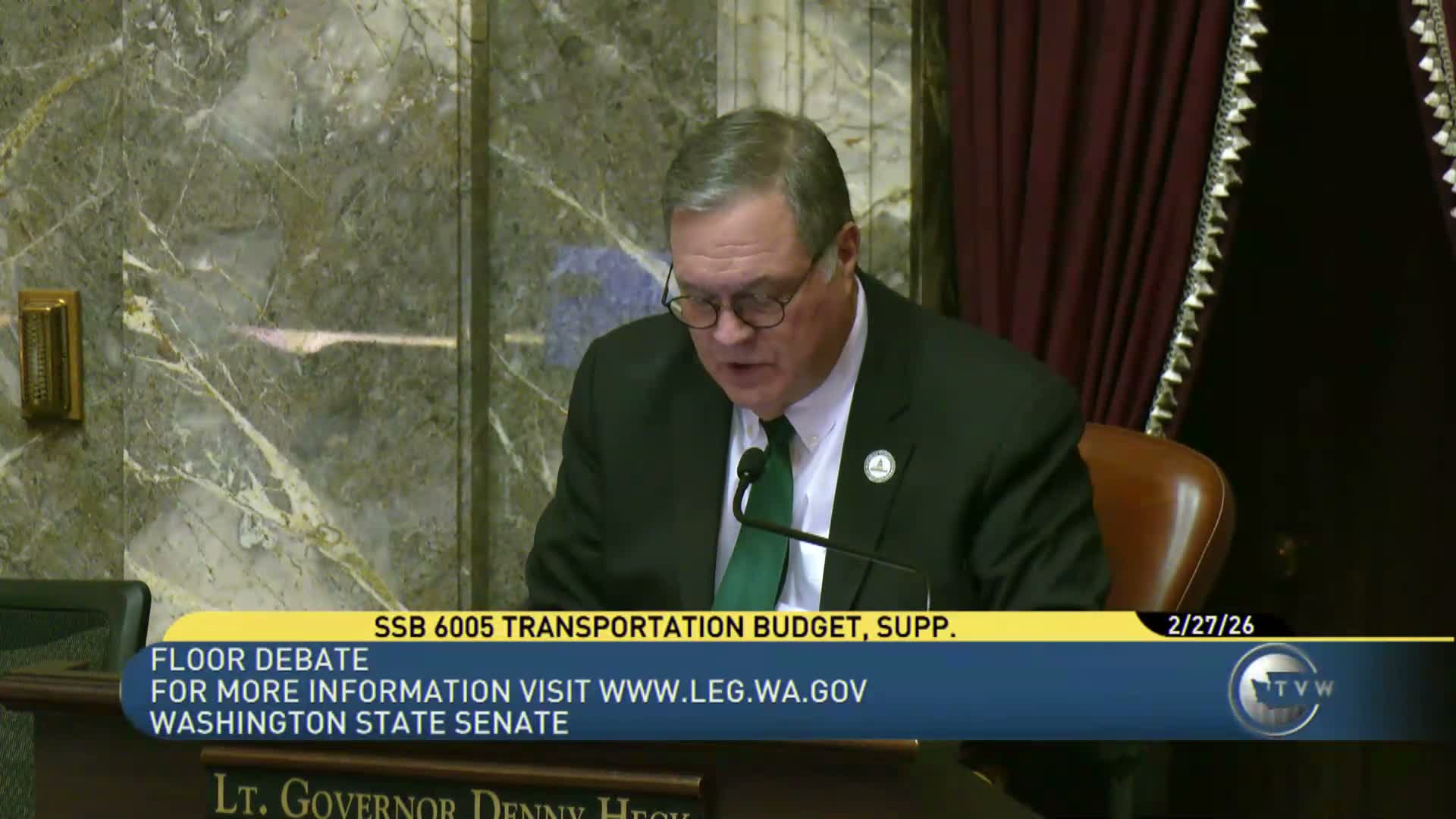
Summary
The Senate passed the transportation supplemental (SB 6,005) and approved a bonds authorization bill (SB 6,225) to fund preservation, ferry investments and disaster response. Chairs described multi-year preservation and safety priorities; the measures passed with large bipartisan margins.
The Washington State Senate voted to pass a transportation supplemental and a companion bonds authorization package on Feb. 23 that leaders said will prioritize preservation, safety corridors and ferry system investments.
Senator Lias, chair of the Transportation Committee, described the package as a six‑year plan that adds roughly $1.2 billion for preservation and new targeted investments in ferry maintenance and high‑risk corridors. "This budget builds on our bipartisan work... to invest in our infrastructure," Lias said on the floor, pointing to funding for emergency flood-response work and local preservation grants.
The chamber also considered a bonding bill that would unlock additional preservation funding; the treasurer’s office advised conservative bonding capacity and the bill’s sponsors proposed an issuance well within those limits. After debate the bond measure (substitute SB 6,225) passed with the margin required for a constitutional majority; the transportation supplemental (engrossed substitute SB 6,005) also passed on final passage with broad bipartisan support.
Committee leaders highlighted targeted uses: additional maintenance crews, ferries acquisition funding phased beginning in 2030, disaster-response dollars for recent flood damage and work to modernize ferry maintenance facilities. Senators emphasized local projects across the state — from rural bridges to high‑capacity corridors — and described job creation and long-term preservation as primary goals.
Both bills now proceed through the remaining procedural steps toward enactment and implementation. Sponsors said program-level distribution will follow adopted provisos and normal agency planning processes.