Get Full Government Meeting Transcripts, Videos, & Alerts Forever!
Get email alerts on the Firearms Background Checks topic
No spam. Unsubscribe anytime.
Committee hears opposition and defense of bill to let WSP raise firearm background‑check fees
Summary
At a Feb. 27 Ways and Means Committee hearing, proponents from the Washington State Patrol said HB 2521 lifts an $18 cap so fees can cover program costs; survivors and gun‑rights groups called the change an unconstitutional and regressive fee that would price out low‑income residents.
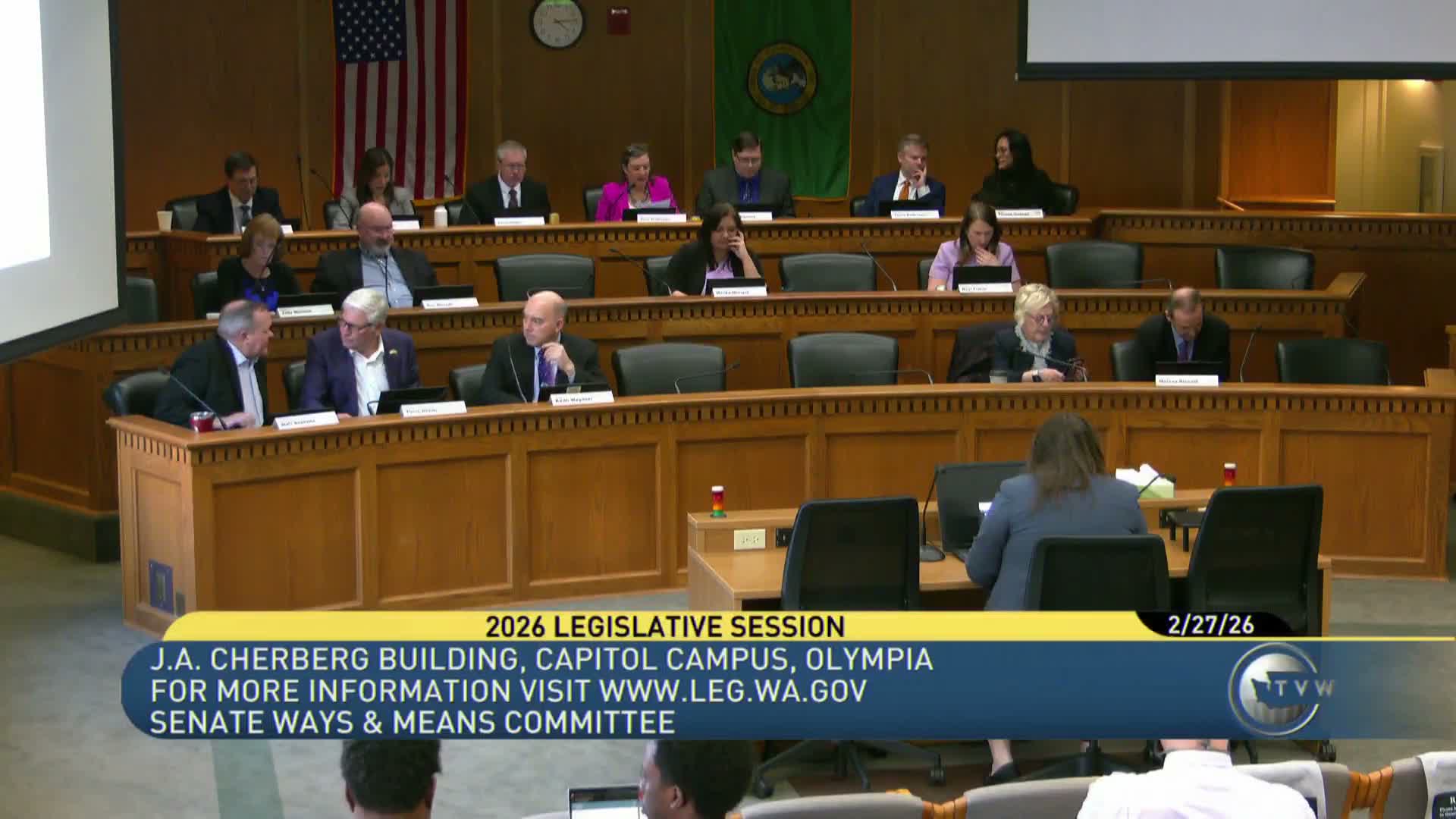
Chair Robinson convened the hearing on House Bill 2521, which would remove the $18 statutory cap on firearms background‑check fees and allow the Washington State Patrol (WSP) to set fees based on operating costs.
Committee staff and WSP legislative liaison Kimberly Mathis told the committee the background‑check program was created in 2020 as a single point of contact for dealers and is funded by an $18 fee that no longer covers costs. "We process over 22,000 background checks each month," Kimmy 80 said, adding that manual reviews and processing costs have grown and that without authority to adjust fees the agency could face layoffs and longer processing times.
During public comment, survivors and gun‑rights advocates urged opposition. Jane Melhance, a Pierce County resident who identified herself as a certified firearm instructor and survivor of a home invasion, argued the bill "will create a burden on this lower income group" she serves and called it unconstitutional under "Article I, Section 24" as read in her testimony. Lisa Olsen described a personal terror event and said higher fees would make lawful self‑defense more expensive.
Aileen Klein spoke for the NRA in opposition, calling the measure an "unconstitutional tax" and a "blank check" that would let government officials set fees without sufficient legislative oversight. Brian Keelan, representing several shooting organizations, called the fee increase an "unfair poll tax" and criticized the bill's path to the committee.
WSP and staff acknowledged a fiscal note is indeterminate because future fee adjustments would be tied to cost calculations, but staff gave an example that to match anticipated expenditures fees could rise to roughly $33–$35 per check, a near doubling from $18.
The committee did not take a final vote on the underlying bill during the hearing; the session concluded after public testimony and the chair moved to the next agenda item.
Ending: The hearing record shows a mix of public safety and constitutional concerns on one side and operational sustainability arguments on the other. The committee may request additional fiscal detail before further action.