Get Full Government Meeting Transcripts, Videos, & Alerts Forever!
Get email alerts on the Legislative Actions topic
No spam. Unsubscribe anytime.
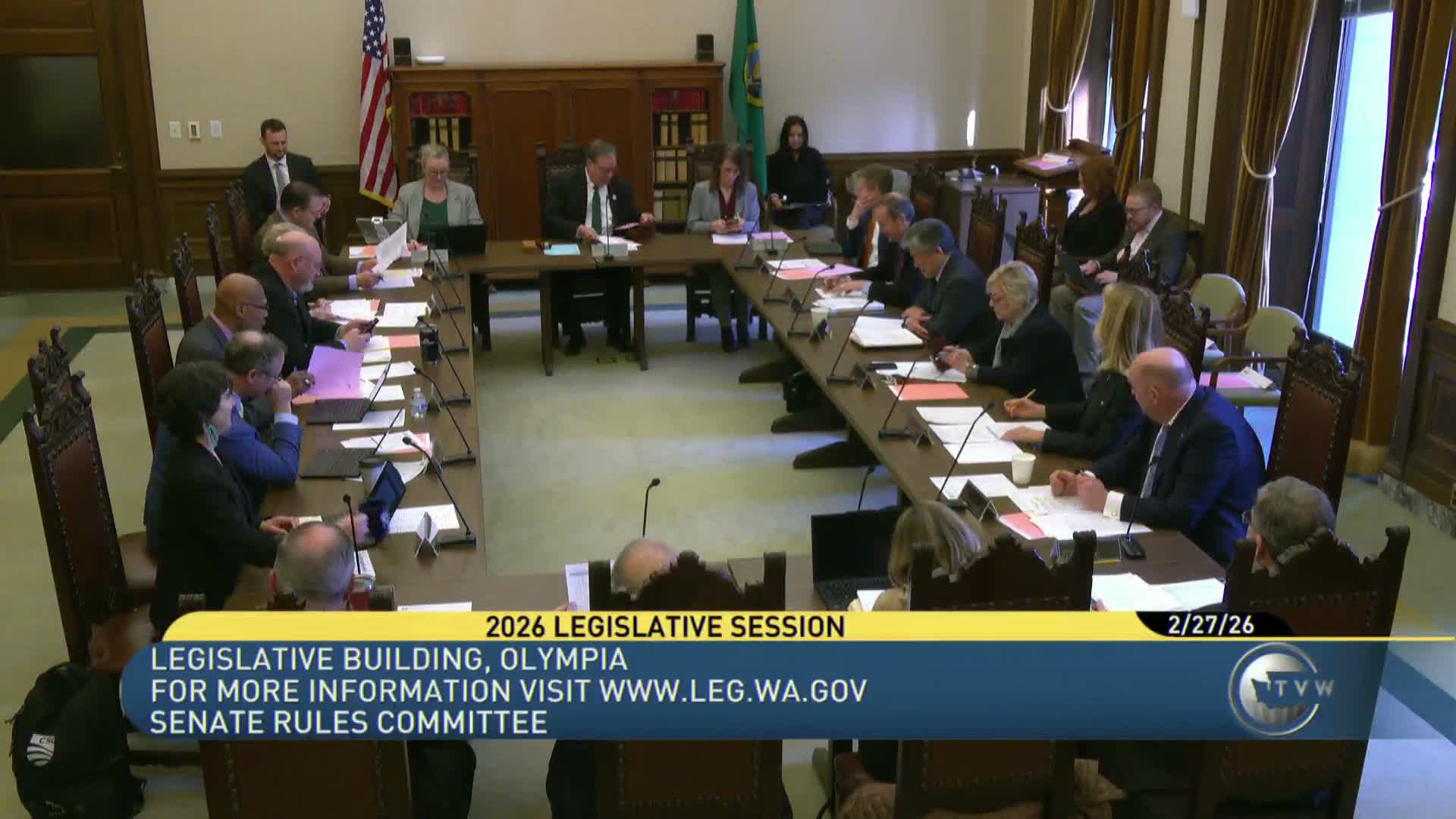
Senate advances a slate of house bills to the floor in a single session
Summary
The chamber moved a broad consent and regular calendar and advanced more than a dozen house bills to the floor by voice vote, including measures on housing, education, insurance notices, correctional indigency thresholds and modifications to statutory language.
The floor advanced a large batch of measures from both the consent and regular calendars to the floor calendar by voice votes.
Senator Petersen moved both the consent-calendar and the regular-calendar packages; the chamber approved both motions. The session then advanced individual house bills from the white sheet to the floor calendar, covering a range of policy areas including housing, education, public safety, insurance and administrative changes.
Notable floor advancements included: - House Bill 2320 — legislation described as targeting untraceable 3‑D‑printed "ghost guns" (advanced after debate and an objection from Senator Short). - House Bill 2632 — replaces the statutory term "alien" with "noncitizen" across state statutes, advanced by Senator Hasegawa. - House Bill 2539 — adjusts the monetary threshold for defining an indigent inmate (referenced as less than a $100 balance in an institutional account), advanced by Senator Wilson. - House Bill 2428 — requires life insurance policies to notify third parties who help manage policies when coverage could lapse due to unpaid premiums, advanced by Senator Lubbock. - House Bill 2557 — requires school districts to provide parents a copy of a special-education report within 35 days of consent to evaluate and to wait at least 5 days before scheduling an eligibility determination meeting, advanced by Senator Braun. - House Bill 2266 — sets standards for where cities and counties must allow "step housing" (permanent supportive, transitional, indoor emergency housing), advanced by the presiding officer.
Most motions were resolved by voice vote; the transcript records "The ayes have it" for each advancement but no roll-call tallies or recorded counts. Where senators spoke in favor, they emphasized bipartisan support, technical fixes, or clarity in statutory language; in several items senators described the bills as noncontroversial or routine process steps.
Next steps vary by bill: advancement to the floor calendar means the measures are placed for further floor consideration; the transcript does not record final floor passage for these bills during this session.
All motions and the chamber's approvals were routine voice votes in this session; items receiving substantive floor pushback (notably HB2320) were still advanced to the floor.