Get Full Government Meeting Transcripts, Videos, & Alerts Forever!
Get email alerts on the Temporary Borrowing topic
No spam. Unsubscribe anytime.
Greendale School Board authorizes up to $2.5 million in temporary borrowing
Summary
The Greendale School District Board unanimously approved a resolution to authorize temporary borrowing of up to $2.5 million through participation in a pooled PMA tax- and revenue-anticipation promissory note program to address first-half cash-flow timing and a depleted fund balance.
The Greendale School District Board of Education unanimously approved a resolution authorizing temporary borrowing of up to $2,500,000 and participation in a pooled tax- and revenue-anticipation promissory notes program managed through PMA Financial.
Jonathan Mitchell, who presented the district's financial case, said: "So as discussed in the budget hearing, we project the need for authorization up to $2,500,000." He told the board the district's fund balance has fallen to roughly $5,400,000, which put it just below the board's target threshold of about 15% of the operating budget.
Mitchell explained the district considered a short-term cash-flow borrowing arrangement with the Village of Greendale last year but said village staff and their financial advisers had concerns about carrying debt through the village fiscal year and potential effects on the village's credit rating. He described the PMA pooled approach as a way to seek a lower interest rate and share administrative fees with other districts, listing Cedarburg, Elmbrook, Mequon, Thiensville and Saint Francis among participating districts.
Mitchell said the projected borrowing period would run from Oct. 24, 2024, through June 27, 2025, and that the pooled note would be put out to bid in October. He added that funds not needed at particular times would be held in high-interest accounts or invested through local government pools to reduce net interest costs.
Board members asked whether a different state payment schedule would reduce the district's need to borrow. One board member proposed advocacy with other districts to press for earlier state disbursements. Mitchell said shifting the early-year state share from 15% to 25% "would be very close" to eliminating short-term borrowing but that the district would still need to study the numbers closely.
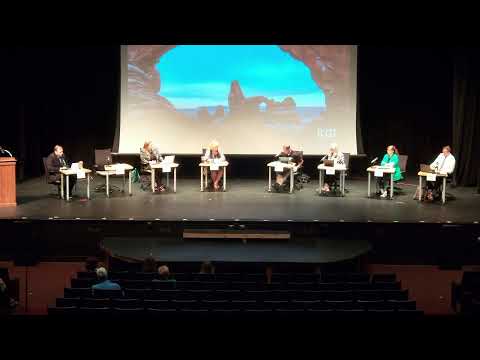
A motion to approve the resolution (agenda item 5.1) was made and seconded; a roll call vote was taken and the resolution passed unanimously.
The board did not specify any amendments to the resolution; staff will proceed with the October bid timeline and report back to the board on the bid results and loan terms.