Get Full Government Meeting Transcripts, Videos, & Alerts Forever!
Get email alerts on the I495 Express Lanes topic
No spam. Unsubscribe anytime.
VDOT presents preferred two‑lane express‑lane alternative for 11‑mile I‑495 southern segment
Summary
VDOT told the Northern Virginia Transportation Authority it recommends two buffer‑separated express lanes for an 11‑mile I‑495 Southside segment, with multimodal commitments including bus service and bike/ped improvements; the project remains in the environmental‑assessment stage, and FHWA review is expected in early 2026.
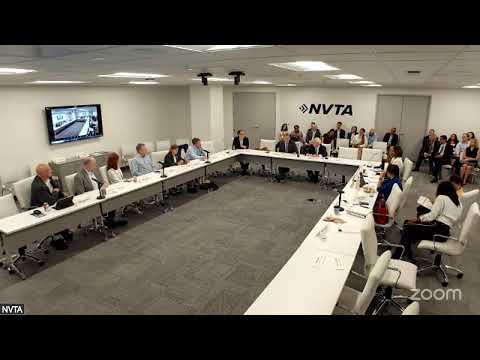
VDOT officials presented an environmental‑assessment‑stage recommendation to add express lanes on an 11‑mile southern section of I‑495, telling the Northern Virginia Transportation Authority on June 12 that the preferred build alternative would generally provide two buffer‑separated express lanes in the core segment and transition to a single express lane in the eastern reaches.
"We kicked off our study in 2022," said Michelle Shropshire, Northern Virginia District VDOT projects director. She described three alternatives carried forward—no‑build, one express lane and two express lanes—and said the two‑lane option showed the strongest benefits for travel time reliability and throughput while maintaining the existing general‑purpose lane count on the corridor.
The presentation highlighted modeling results and multimodal commitments that VDOT plans to include in the environmental assessment. These commitments include new bus service between central Prince George’s County and Tysons, targeted bike and pedestrian facility additions where gaps exist, and preserving space on the Woodrow Wilson Bridge for possible future rail conversion. VDOT staff said the express lanes would support faster, more reliable trips for both buses and private vehicles and that general‑purpose lanes could also see improved speeds under the two‑lane scenario.
Shropshire said the study horizon year is 2050 and that staff have been coordinating with DRPT and other regional agencies; she noted VDOT’s procurement options could include public‑private partnership (P3) or design‑build and that concession agreements would be used if a P3 delivery were selected. She stressed that the environmental assessment is an early step with opportunities for refinement and mitigation through design and public engagement.
Authorities and staff discussed next steps and approvals. VDOT said the study will be presented to the Commonwealth Transportation Board in July, will seek a regional recommendation later in the year, and expects a decision from the Federal Highway Administration on the environmental assessment in early 2026. The public comment period on the hearings' materials remains open through June 26, and VDOT is accepting comments via online forms, mail, email and a phone line.
The Authority did not take action on the project at the June 12 meeting; VDOT's presentation and the environmental assessment remain subject to further review and approvals by the region, CTB and FHWA.