Lifetime Citizen Portal Access — AI Briefings, Alerts & Unlimited Follows
Plaintiff says USAA ignored medical records in Williams v. USAA; insurer says key material arrived after litigation
Loading...
Summary
At a morning court hearing in Williams v. USAA, plaintiff counsel argued USAA received medical records and then closed the claim file without explanation; USAA counsel said substantive information and demand materials were not provided to the insurer until after litigation began.
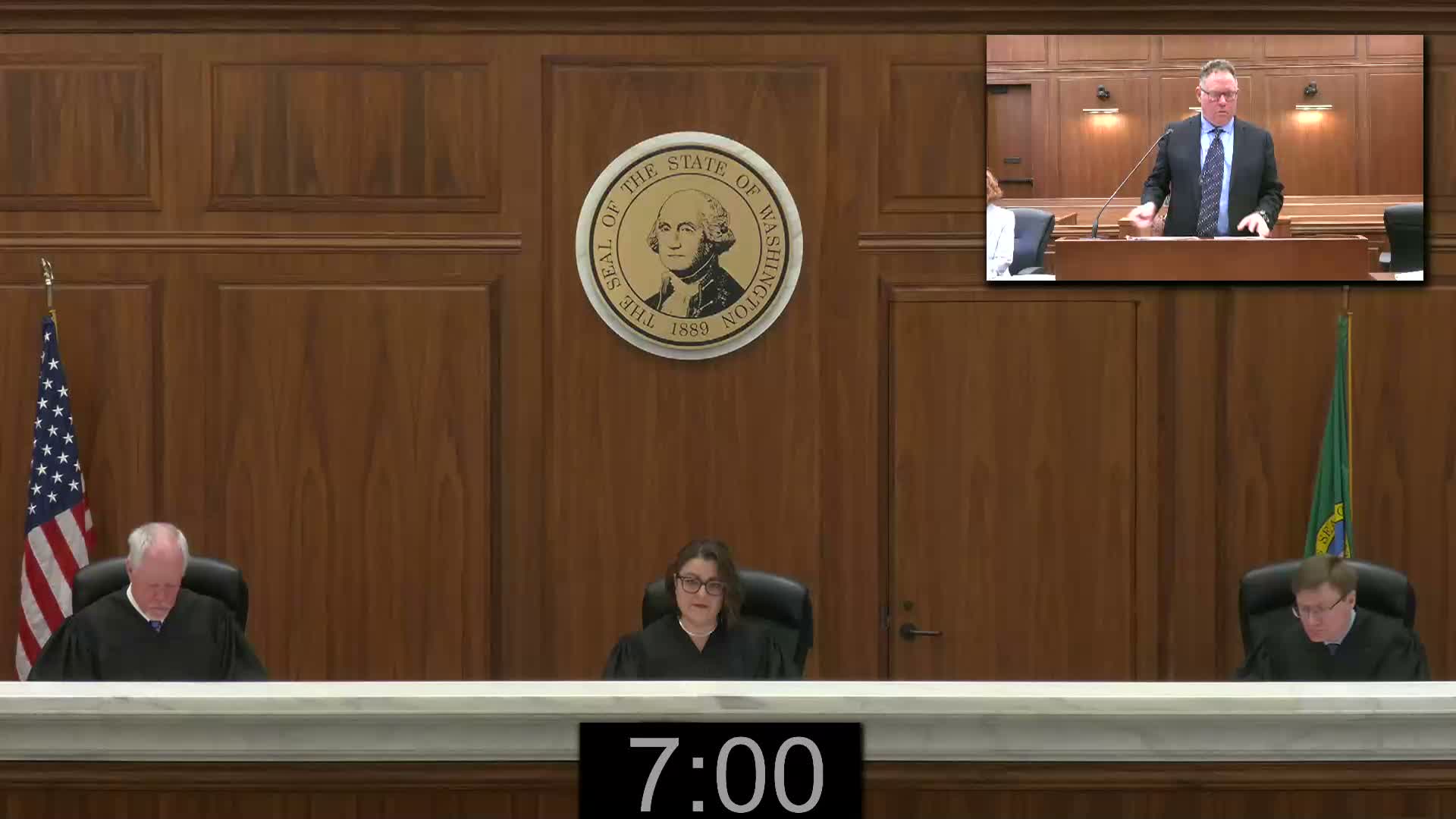
A court panel heard argument in Williams v. USAA Casualty Insurance on whether a summary-judgment ruling should stand and whether the insurer acted in bad faith in handling the plaintiff's UIM claim.
Plaintiff's counsel told the court that Harborview provided roughly 61 pages of medical records to USAA's adjuster and that the insurer nevertheless stopped reviewing the file and never explained why. "The record shows that she had 2 broken orbital sockets, a punctured lungs, broken ribs, intubated at the scene, had was induced into a coma," the plaintiff's counsel said while describing the ongoing nature of Hannah Williams' treatment and arguing those facts undermined any suggestion the claim was effectively resolved.
Kimberly Repart, counsel for USAA Casualty Insurance Company, responded that USAA did not receive "information, substantive information about the claim and the medical records and the injuries and the damages until they got a copy of the demand sent to defendant Parker a few months after litigation had commenced," and urged the court to distinguish pre-litigation investigation from conduct that occurred after litigation began. Repart cited authorities the insurer says limit the use of litigation-period conduct in bad-faith claims and argued that some materials are privileged or work product.
Why it matters: the parties dispute whether the insurer had the information it needed to evaluate the underinsured motorist (UIM) claim before litigation and whether any post-litigation conduct may be treated as part of the claim-handling duty. Plaintiff counsel argued letters the insurer cited were answered (verbally), that the insurer knew of the severity of Williams' injuries, and that silence followed a period of record receipt. USAA counsel countered that the adjuster lacked definitive medical and policy-limit information until demand and that company policy limited access to certain claim-file material.
The court panel questioned both sides about whether the documentation and internal policies gave the UIM adjuster a reasonable opportunity to investigate the claim. Counsel for USAA asked the court to consider Siedle and related case law distinguishing litigation conduct from claim-handling conduct; plaintiff counsel stressed the sequence of records and communications and suggested the insurer's closing of the file without notice weighed against granting summary judgment for the defendant.
What was decided and next steps: the record on the summary-judgment ruling remains under review by the court; no new final appellate ruling was announced at the hearing and the panel adjourned for the morning.
Notes: Quotes and attributions come from counsel who argued in the hearing. Court authorities invoked during argument include Siedle, Locke, Leahy, Richardson and Hough and a reference to CR 35 procedures for independent medical examinations.