Get Full Government Meeting Transcripts, Videos, & Alerts Forever!
Get email alerts on the Institutional Development topic
No spam. Unsubscribe anytime.
School district support center proposal draws neighbor concern over wildlife, trucks and noise
Summary
The commission reviewed the district's Support Center proposal and staff recommended CP‑3 zoning with deviations; neighbors raised concerns about impacts on a wooded stream corridor, wildlife, truck access on narrow residential streets and potential noise during construction and operations.
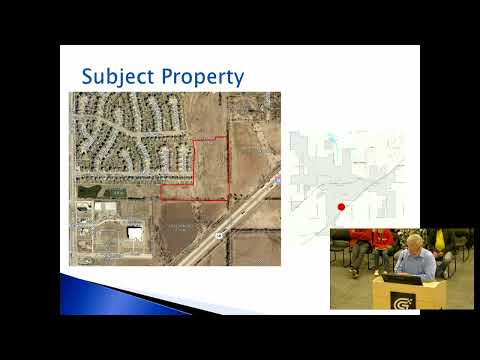
City planning staff presented a plan for a Gardner School District Support Center and recommended rezoning the site to a CP‑3 (heavy commercial) planned district with four deviations and standard plat conditions. The proposal would locate operations, food‑service prep, technology and training space on a site with a stream corridor and adjacent residential zoning.
Nearby residents voiced concerns in the public hearing about preservation of the stream corridor and wildlife, potential bird collisions with windows, construction noise, parking-lot lighting, truck traffic on narrow residential streets (Poplar) and long-term effects on property values. Karen Demaro and Cece Noriega asked what measures the district would take to protect wildlife and to limit truck circulation on neighborhood streets.
District representatives said most deliveries would be made with district trucks or box trucks, with tractor‑trailers used rarely for large equipment deliveries; operations staff typically check out equipment early and leave to perform tasks citywide. Engineers said stormwater would be managed through underground detention and water-quality measures, and the salt-storage bin would be enclosed with no runoff. Commissioners and staff discussed CP‑3 zoning selection as a transition in an area that also contains industrial zoning to the south and commercial zoning to the north; no final vote on rezoning appeared in the transcript excerpt.
Next steps identified during the meeting included staff follow-up on specific construction hours, truck routing and ensuring final plans include required water-quality and stormwater controls.