Get Full Government Meeting Transcripts, Videos, & Alerts Forever!
Get email alerts on the Fintech Banking topic
No spam. Unsubscribe anytime.
Robinhood CEO Vlad Tenev outlines banking push, tokenization plans and stablecoin uses
Summary
At a Federal Reserve community banking conference, Robinhood CEO Vlad Tenev described the company’s banking rollout, a high-return credit card, tokenization projects in Europe and using stablecoins as a 24/7 settlement rail rather than a U.S. retail deposit alternative.
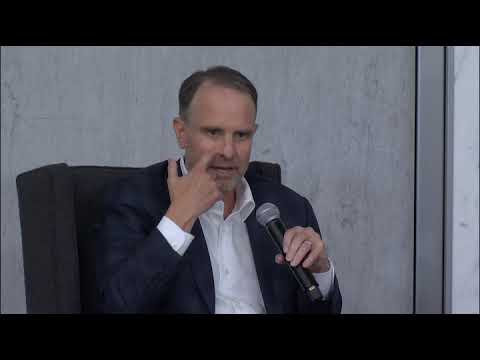
Robinhood cofounder and CEO Vlad Tenev said onstage that the company has begun rolling out Robinhood Banking and is pursuing a strategy to become a "financial super app," adding banking products, a gold credit card and tokenization pilots to its brokerage offerings.
Tenev, speaking after an introduction from Eric Sprink of Coastal Community Bank, said Robinhood announced its banking product in the first quarter and performed an external rollout last week. "The goal of Robinhood was to be a financial super app, to not just be the place where you trade, but, actually, all of your finances should be handled by our software, our technology," he said.
Why it matters: Tenev framed banking as the funnel that funds other services — paychecks flow into bank accounts and then to savings, investments and credit. He argued Robinhood’s approach is to replicate the private-banking experience at scale, including a newly launched Robinhood Concierge customer service and a Robinhood Gold credit card that offers "3% cashback on all categories," which Tenev said had crossed roughly 400,000 cardholders and carried a wait list he described as "north of 3,000,000."
Tenev acknowledged prior product attempts that underperformed (Robinhood spending accounts and cash-management features) and said customers often prefer separate buckets for day-to-day spending and long-term investments. "People don't like the money that they use for core day to day spending to be intermixed with their retirement savings or their long term investments," he said.
On crypto and tokenization, Tenev said many crypto tokens lack utility and that regulatory posture in the U.S. has shaped product development. He described tokenization as "taking a real asset and making it divisible and tradable using blockchain technology" and said Robinhood launched stock tokens in Europe with as many as 500 liquid names available to retail investors there. He highlighted tokenized giveaways of OpenAI and SpaceX stock tokens to demonstrate new liquidity and trading possibilities.
Tenev emphasized a pragmatic role for stablecoins: rather than urging U.S. consumers to hold deposits in crypto form, he said stablecoins are valuable operationally as a 24/7 settlement rail that lets firms move money on weekends without relying on ACH or large credit lines. "Stablecoin, great solution because it doesn't matter what bank they have. If you settle in stablecoins $24.07, real time, on weekends...it sort of, like, solves the problem," he said. He added that for U.S. retail customers, holding dollars in stablecoin form is "not super attractive" given FDIC insurance and traditional deposit features.
On other innovations, Tenev spoke about a side company, Harmonic, that aims to combine AI creativity with mathematically verifiable outputs to reduce errors in AI-generated code and calculations. He also defended prediction markets as information tools, calling them "truth machines" that give real-time probability signals for events such as Fed decisions.
Audience questions focused on whether stablecoins have practical use for Main Street businesses. Tenev said domestic payment rails and credit cards remain highly competitive but that niche or international opportunities could make stablecoins valuable for some banks and customers.
The session moved to closing remarks after roughly an hour of conversation; Tenev warned scaling novel services (for example, cash delivery) will present operational challenges as products expand.