Lifetime Citizen Portal Access — AI Briefings, Alerts & Unlimited Follows
FOMC cuts policy rate 25 basis points, begins short-term Treasury purchases to bolster reserves
Loading...
Summary
The Federal Open Market Committee lowered its target federal funds range by 25 basis points to 3.50–3.75% and directed the Federal Reserve Bank of New York to begin reserve-management purchases of Treasury bills, with $40 billion planned in the first month, according to Chair Powell.
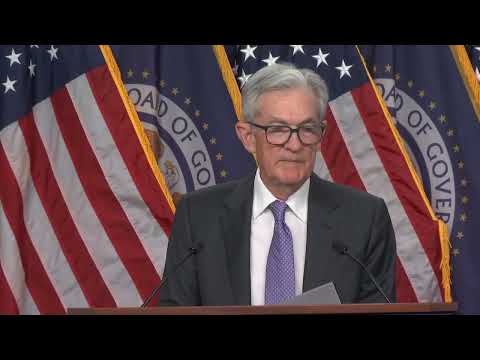
Chair Powell announced that the Federal Open Market Committee decided to lower its target range for the federal funds rate by a quarter percentage point to 3½–3¾ percent and to initiate purchases of shorter-term Treasury securities "for the sole purpose of maintaining an ample supply of reserves over time." Powell said the moves reflect a rebalancing of risks between employment and inflation and follow previous reductions totaling 75 basis points since September.
Powell summarized the committee's economic assessment, noting that available indicators show moderate economic expansion, solid consumer spending and continued business investment, while housing activity remains weak. He said labor-market measures point to gradual cooling and that some official government data remain delayed. In the Summary of Economic Projections (SEP) he cited the median participant forecasts that real GDP will rise about 1.7% this year and 2.3% next year and that total PCE inflation is projected at roughly 2.9% this year and 2.4% next year before returning toward 2% thereafter.
On implementation, Powell said the reserve-management purchases are distinct from the stance of monetary policy and are intended to keep short-term rates within the Fed's target range by ensuring an ample supply of reserves. A statement from the Federal Reserve Bank of New York accompanying the press conference said reserve-management purchases will amount to $40,000,000,000 in the first month and could remain elevated for a few months to address near-term pressures in money markets.
Powell acknowledged the committee's deliberations were not unanimous: "We had, you know, 9 out of 12 supported it," he said, describing a broad but spread-out set of views around the table. He emphasized that the SEP projections are individual participants' forecasts and "are not a committee plan or decision." The chair warned that while goods inflation has been elevated in part due to tariffs, services inflation shows disinflation, and the committee will weigh incoming data carefully before determining any further adjustments.
In a question-and-answer session, Powell repeated that the committee's decisions will be data dependent. On tariffs, he said goods inflation related to tariffs should peak roughly in the first quarter of next year, barring new tariff announcements, and could then diminish; timing, he said, is imprecise. Powell also said there appears to have been a systematic overcount in payroll employment that affects near-term interpretation of jobs data—he estimated an overstatement on the order of about 60,000 jobs per month in recent months, a factor the committee will account for when assessing labor-market strength.
Powell closed by reiterating the Fed's dual mandate to promote maximum employment and stable prices and said the committee remains committed to bringing inflation sustainably down to its 2% goal while supporting the labor market. He said the reserve-management purchases and the rate decision are intended to balance those objectives and that future moves will be made on a meeting-by-meeting basis.