Get Full Government Meeting Transcripts, Videos, & Alerts Forever!
Get email alerts on the Workforce Development topic
No spam. Unsubscribe anytime.
Glens Falls MSA scores well overall but local leaders warn workforce shortfall threatens future growth
Summary
Jeff Flagg and county workforce staff told the Warren County Economic Growth committee that the Glens Falls MSA ranked in the top 20% nationally for overall economic health but lags on prime‑workforce measures; presenters urged steps to attract young workers, expand attainable housing and align training to employer needs.
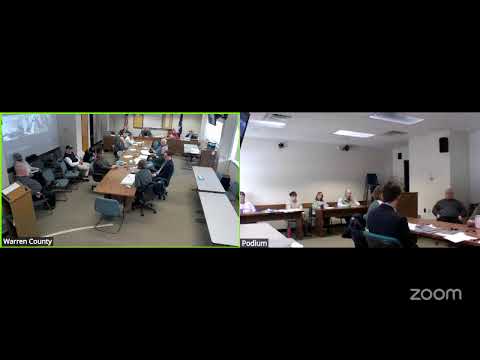
Jeff Flagg, economic development director for the City of Glens Falls, told the Warren County Economic Growth & Development Committee on Feb. 24 that the Glens Falls metropolitan statistical area, which comprises Warren and Washington counties, performed “very well” in a recent Area Development Magazine ranking but shows a structural workforce weakness.
Flagg said the MSA placed 175th out of 949 areas surveyed—roughly the top 18.5% nationally—but that the region’s prime‑workforce measures (labor quality and readiness) ranked much lower. "The economy in Glens Falls is very strong, but our workforce pipeline is not keeping pace," Flagg said, urging local government to focus on attracting and retaining young workers, expanding attainable housing and aligning training with regional industries.
Liza, a county workforce staffer who presented county program and spending details, said Warren County’s December unemployment rate stood at 4.2% and that the county had run a recent job fair that drew 205 job seekers and 22 local employers. She said federal programs such as the Workforce Innovation and Opportunity Act (WIOA) and new Pell eligibility for trade programs expand training options, but local funding gaps remain: county investment for 2026 was listed at $125,000 to supplement federal dollars.
Liza summarized 2025 outcomes, saying the county spent about $125,000 on training and recorded 21 people who completed commercial driver’s license (CDL) training in 2025, along with credentialing in welding, nursing and recovery‑peer advocacy. She also described supportive services—gas cards, licensure exam fees and boots—used to remove barriers to work.
Committee members asked about eligibility and program rules. One supervisor asked how staff verify candidates’ legal authorization to work before funding CDL training; Liza said applicants must provide identifying documents and social‑security information and that eligibility decisions are made case‑by‑case. The county attorney said enforcement questions and any repayment or retention requirements for county‑funded training would need further legal and HR review.
Why it matters: Committee members framed the discussion as a link between local economic success and an eroding pipeline of workers. Staff emphasized that continued county investment, better data capture and partnerships with schools, SUNY Adirondack and employers are central to keeping employers able to hire locally.
The committee did not take a separate vote on policy changes during the presentation; staff said they will return with additional data and recommendations in future meetings.