Get Full Government Meeting Transcripts, Videos, & Alerts Forever!
Get email alerts on the Digital Assets Regulation topic
No spam. Unsubscribe anytime.
Subcommittee chair criticizes SEC, defends FIT 21 in opening statement
Summary
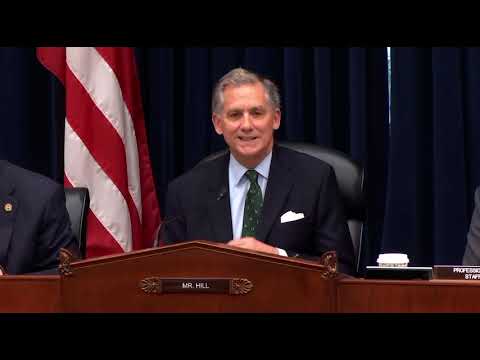
The chair of the House Committee on Financial Services' Subcommittee on Digital Assets opened the session by touting recent legislation including FIT 21 and the Clarity for Payment Stablecoins bill, and sharply criticized the SEC and Chair Gary Gensler for what he called politicized enforcement and unclear guidance that harms U.S. market competitiveness.
The chair of the House Committee on Financial Services' Subcommittee on Digital Assets, Financial Technology Inclusion delivered the opening statement, citing the panel's work this Congress and pressing the Securities and Exchange Commission on its approach to regulating digital assets.
"I've been privileged to lead our digital asset subcommittee," the chair said, highlighting passage of the Clarity for Payment Stablecoins legislation and the FIT 21 regulatory framework bill. He said those measures represent bipartisan legislative progress aimed at providing legal clarity for market participants.
The chair criticized the SEC and its chairman, Gary Gensler, accusing the agency of "front end[ing] the work of Congress" and "insert[ing] politics instead of being an independent regulator." He said the SEC released a public statement opposing FIT 21 on the morning of the House vote and that the agency declined to provide technical assistance the committee had requested.
The chair argued the SEC has a statutory mandate "to protect investors, maintain fair, orderly, and efficient markets, and facilitate capital formation," and asserted the agency's recent actions have instead increased uncertainty for consumers, founders and investors. "The SEC's approach has injected even more confusion and uncertainty into the markets and for market participants and consumers alike," he said, calling the result a "lose‑lose situation."
He highlighted Staff Accounting Bulletin 121 as an example, saying it "upends decades of legal precedent in the custody business and creates an impermeable hurdle" for banks and trust departments seeking to provide digital asset custody services. The chair described the effect as driving some firms and developers to relocate overseas, naming Singapore, the United Kingdom and the European Union as destinations and citing "one report" that estimates the U.S. has lost about 14% of blockchain developers since 2018.
On recent market developments, the chair said the approval of Bitcoin and Ether exchange‑traded products was a limited victory that came only after extensive litigation and expense, and after the SEC "could no longer explain to the courts" why certain spot products were not approved earlier.
The chair closed by stressing that backing FIT 21 and a regulatory framework does not mean the subcommittee opposes SEC action against bad actors or modernization of rules where appropriate. He thanked the witnesses for appearing and then recognized the ranking member, "the gentleman from Massachusetts, Mr. Lynch," for four minutes to give his opening statement.
The hearing then moved to the ranking member's remarks, beginning the question-and-answer and testimony portion of the session.