Get Full Government Meeting Transcripts, Videos, & Alerts Forever!
Get email alerts on the Medical Cannabis topic
No spam. Unsubscribe anytime.
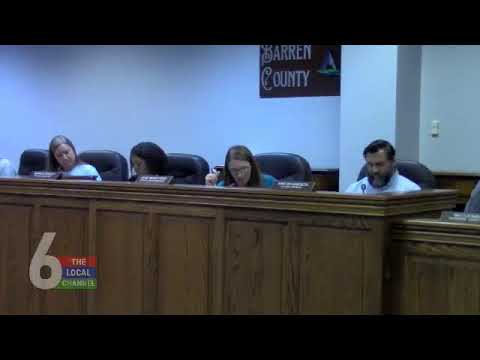
Barren County officials debate medical cannabis opt-in, defer decision to July after calling for public input
Summary
Magistrates and county officials in Barren County discussed whether to opt in to Kentucky's new medical cannabis program. Officials split between immediate opt-in to capture jobs and revenue and delaying for more information; the court agreed to defer formal action to July and consider town-hall style public engagement.
Barren County Fiscal Court spent a substantial portion of its meeting discussing whether the county should opt in to Kentucky's new medical cannabis program, but did not take a final vote. Magistrates offered widely differing views and the court agreed to delay action until July and to consider public outreach.
At the meeting, Magistrate (speaker 3) said he was "100% for medical cannabis" personally but recommended the court wait and "see how it goes" before formally opting in for the county, noting uncertainty about statewide implementation and licensing fees. "My feeling is we should opt out at this time," he said, while adding that he supports medical access for patients.
Several other magistrates urged a different approach. One magistrate (speaker 9) argued that opting in would create jobs across growing, manufacturing and retail and said the state has already deemed the medical program "safe and effective" for many conditions. "This is the future," he said, urging the court not to delay.
Planning and regulatory staff (speaker 4) corrected several factual points and outlined state timelines: the application window for licenses runs July 1'Aug. 31, while the county may make an opt-in/opt-out decision by a later statutory deadline (the speaker said December 31). The planning director also emphasized that cultivation under the program will occur in secure, indoor facilities rather than open-field farming and that local land-use authority is limited in the county; local regulation would focus on building codes and setbacks.
County Attorney Richardson (speaker 14) flagged enforcement and regulatory concerns, noting that many regulatory responses rely on administrative systems and license revocation and that evidence on public-health outcomes is mixed. He cautioned the court to consider enforcement capacity and cited studies and experiences from other states when discussing potential secondary effects such as changes in alcohol or opioid use.
Magistrate (speaker 12) proposed placing the question on a public ballot so county voters could decide; several magistrates supported holding town halls or other public meetings to gather constituent input before the court acts. The judge said he favored delaying immediate action and suggested revisiting the issue at the court's July meeting, while remaining open to scheduling town-hall style sessions in individual districts to gauge local interest.
Officials also discussed practical implications for applicants: planning staff said an applicant awarded a license in a county that later opts out would need to relocate, and that licensing fees are nonrefundable. The sheriff (speaker 7) and other magistrates expressed concern about enforcement burdens but did not offer a formal recommendation.
The fiscal court did not vote on an opt-in or opt-out resolution. Instead it deferred the matter to its July meeting and instructed members to solicit constituent input in the meantime.