Get Full Government Meeting Transcripts, Videos, & Alerts Forever!
Get email alerts on the Education Assessment topic
No spam. Unsubscribe anytime.
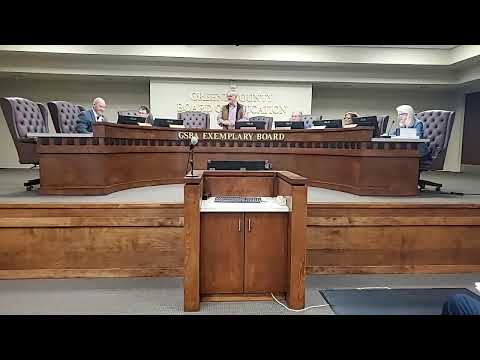
Presenter outlines instructional strategies, WIN intervention and assessment results for Greene County primary students
Summary
A presenter to the Greene County Board of Education described tactile/kinesthetic strategies, a protected 120-minute literacy block, and 'WIN' intervention time; she reported cohort and benchmark assessment results and emphasized the need for balanced environment, curriculum and personnel.
A presenter to the Greene County Board of Education laid out classroom strategies and assessment findings, saying the school uses tactile and kinesthetic activities and a protected 120-minute literacy block so students receive uninterrupted core instruction.
The presenter said the school schedules WIN ("What I Need") time to provide targeted acceleration or remediation and noted that 13 adults are assigned specifically to support third grade. "So protecting that tier 1 instruction is fine," the presenter said, describing how WIN time allows students to be grouped and moved once they meet targets.
Why it matters: the presenter tied the schedule to assessment outcomes, reporting increases in the share of students scoring on or above grade level in reading and describing reductions in the number flagged as well below grade level. She identified Greene County Primary and comparable systems (Brooks County, Oconee County and the state average) as benchmarks for improvement and reminded the board that third grade serves as the baseline year for Georgia Milestones testing.
Details: the presenter said the school gives every student a "plus or minus" on reading measures (not strictly the 1–4 scale) and reported that about 51 percent of third-graders received a plus. She cautioned that some math content (geometry, measurement, division) appears later in the scope-and-sequence, which can make year-to-year comparisons look different.
On curriculum and staffing the presenter argued for a three-part model of school success: "a conducive learning environment, effective research-based curriculum and the right personnel," adding that all three must be in balance for sustainable results. She also noted that some teachers "looped up" with their students from third to fourth grade and presented cohort comparisons showing modest gains in some measures.
The presentation closed with a short, creative reading attributed to Julie Copeland about the excitement of moving into renovated school space and preparing for the new year.
Next step: the presentation was followed by routine board business; the board did not take any immediate action on instructional program changes during this meeting.