Get Full Government Meeting Transcripts, Videos, & Alerts Forever!
Get email alerts on the Attendance Policy topic
No spam. Unsubscribe anytime.
Board reviews attendance policy aligned with new state guidance as trustees press for supports
Summary
Trustees reviewed proposed Policy 4320 to align with Indiana guidance (Senate Enrolled Act 382) on chronic absenteeism; staff described measurement routines, homeless‑student supports, transportation assistance and individualized interventions tied to retention rules.
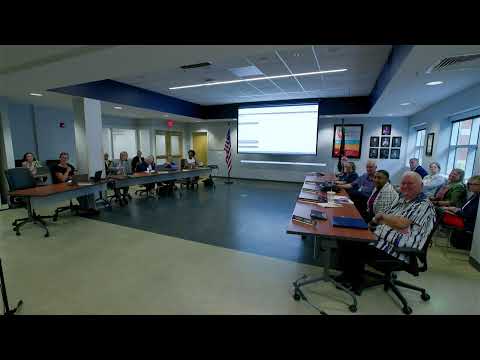
At the Aug. 25 board meeting, trustees reviewed proposed Policy 4320—student attendance, habitual truancy and truancy prevention—that the district brought to align with guidance from the Indiana Department of Education and Senate Enrolled Act 382.
A trustee asked how the district will measure whether the policy improves attendance. Dr. Hoover said the district pulls attendance data regularly, holds monthly school‑level review meetings and uses a director of attendance and school teams to monitor students. ‘‘We pull that regularly…every month we had every school has their rate from last year, what their goal is this year,’’ Hoover said.
Trustees pressed on supports for students experiencing homelessness; Hoover said federal funds and consortium partners cover a homeless liaison and transportation, and the district partners with community organizations to connect families to temporary housing and services. Hoover said funds may also cover extended‑day services for those students.
Board members also discussed statutory consequences for habitual truancy. Hoover said state statute classifies a student as a habitual truant at 10 days, which triggers a required referral to the prosecutor’s office if truancy is unexcused. She emphasized the district’s approach focuses on relationship building, family engagement and early interventions to address underlying barriers.
Trustees and community members suggested expanded partnerships—church vans, mentoring groups and PTAs—to help students get to school. PTA representatives described outreach they have done, including distributing roughly $237,000 in early‑child literacy materials over the past 13 months and winning awards at the state PTA conference.
The policy was presented for information and discussion; the board did not take a final adoption vote on the policy during this meeting.