Get Full Government Meeting Transcripts, Videos, & Alerts Forever!
Get email alerts on the Athletic Site Project topic
No spam. Unsubscribe anytime.
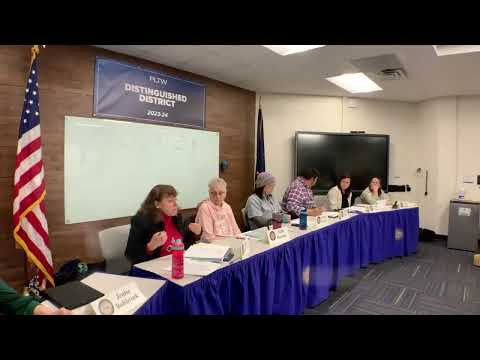
Vendors and community push Brown County school board on turf, track and drainage plans
Summary
Community members, coaches and Hellas Turf told the Brown County School Trustees that a new turf field and track would improve athlete safety and participation; Hellas and Performance Services said a geotechnical survey and engineered drainage are prerequisites and gave cost and warranty estimates.
Brown County’s school board heard an extended public conversation about replacing the high‑school grass field and resurfacing the track after coaches, students and a vendor outlined safety, drainage and cost issues. Community speakers said the existing field causes ankle and shin injuries, discourages student participation and may be costing the district competitive athletes.
"No longer do you have to prove residency...so what's gonna happen in football is all the best kids are gonna go to the best schools," said John Emerick, head voice/track coach at Tri County High School, arguing improved facilities would attract more players. Student Sebastian Stringer described repeated ankle injuries and said a safer surface would let multi‑position athletes return sooner.
Hellas Turf representative Tina Glass told the board her firm manufactures turf and shock pads and will not install a field without a geotechnical survey. "We will not install any field without a geotechnical survey," she said, explaining the standard installation excavates about eight inches, installs drain stone and perimeter drains, and ties into existing storm systems. Glass said a new turf with a quality shock pad typically carries an ~8‑year turf warranty and a 15–25 year shock‑pad warranty and that a full new field with shock pad typically costs about $1.3 million; a later "rip‑and‑replace" (turf only) can run about $400,000–$500,000.
The vendor and Performance Services both flagged the site’s floodplain and drainage as drivers of design choices. A local farmer told the board he has seen the field flood and worried silt and floodwaters could overwhelm turf drainage; Hellas and the Performance Services presenter said engineers would evaluate retaining walls, additional stone and perimeter drains and that a geotechnical/topographic survey is the first step to determine feasibility and cost.
Maintenance and environmental concerns surfaced in Q&A: Glass said regular grooming and periodic professional "clean sweep" maintenance (quoted at about $4,000–$5,000) help preserve infill and performance, and she cited recent multi‑agency EPA/CDC reviews that did not find a difference in chemical exposure for recycled crumb rubber compared with grass. Residents pressed on pellets washing into waterways; the vendor described subsurface collector drains and engineering meant to reduce that risk, and said infill typically requires only periodic replenishment.
Board members and presenters emphasized uncertainty remains until geotechnical and topographic surveys are completed and designs are finalized; the board was told those studies should be performed before any installation decision. The board scheduled a formal public hearing on the projects for March 3, where the public can again comment and the board will consider project resolutions.