
Research traces enslaved, incarcerated and skilled Black labor in Tennessee State Capitol construction
Get AI-powered insights, summaries, and transcripts
Subscribe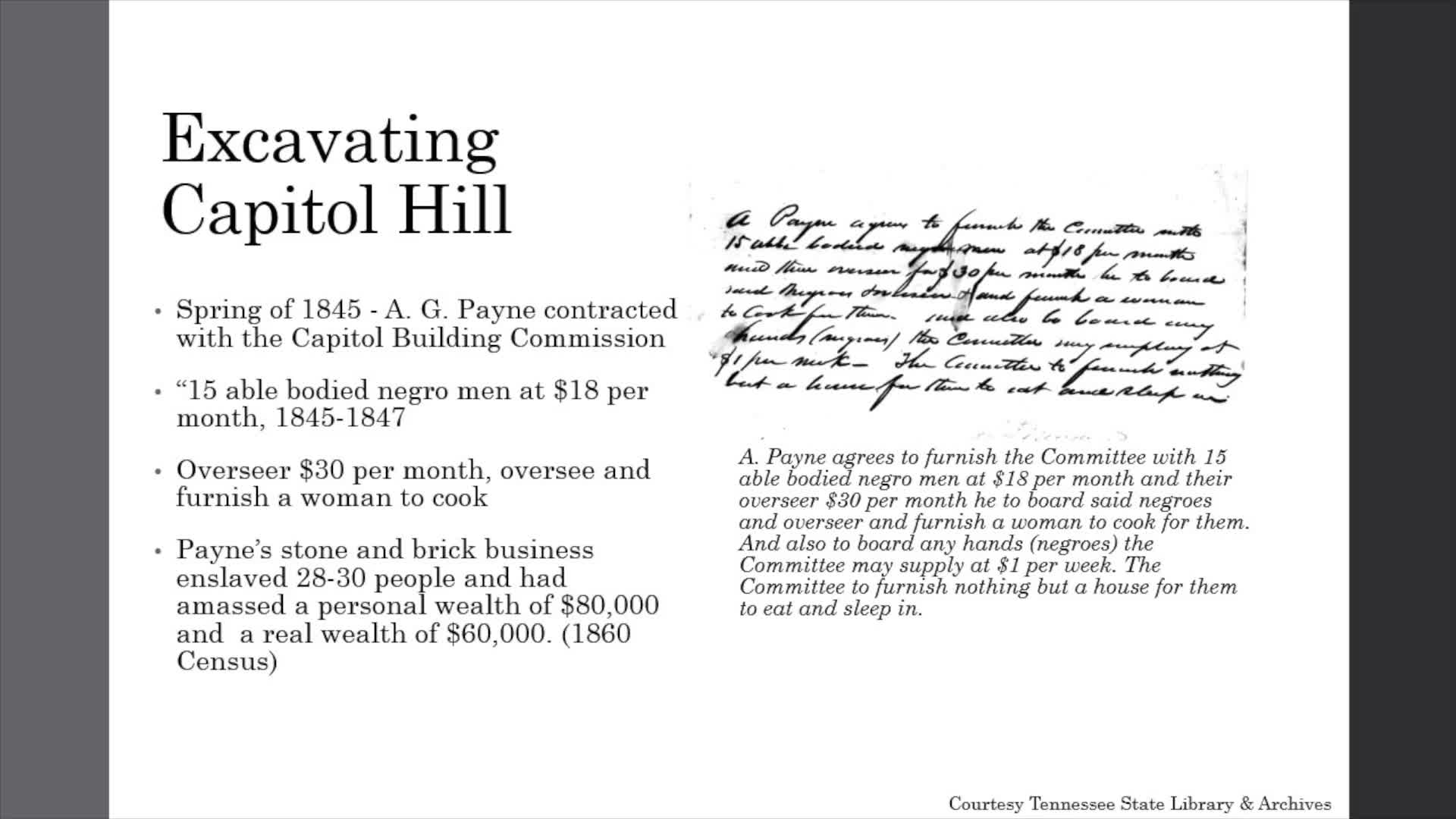
Summary
Jeff Sellers presented primary-source evidence—payrolls, contracts and census records—showing enslaved, free Black, and incarcerated workers performed quarrying and skilled stonemasonry on the Tennessee State Capitol. Sellers said new research and a recent House joint resolution help memorialize those laborers.
Jeff Sellers, director of education at the Tennessee State Museum and State Capitol, told the Nashville conference that primary documents—contracts, payroll sheets, and census records—show a broader, more complex workforce built Tennessees Capitol than previously acknowledged. "This contract ... agrees to furnish the committee with 15 able-bodied ... men at $18 per month and their overseer $30 per month," Sellers read from an 1845 contract that identifies the paid labor structure and records enslaved and subcontracted workers.
Sellers displayed payroll sheets from prominent subcontractor A.G. Payne and payroll listings that include names such as Parker and John that connect skilled stonemasonry tasks to Black workers. He highlighted entries that list enslavers names and descriptions like "Payne's boy," and said the records show a mix of enslaved, incarcerated, and paid white workers on the same project. "These are Payne's enslaved men here... these are the men that he enslaved," he said while pointing to primary documents.
Sellers also traced individuals forward in the record: some appear later in city directories, Freedmens Bank records, and other sources that indicate continued lives and, in at least one case, an independent stonemasonry career. He noted indemnity documents and quarry accident reports that underline how dangerous the stone-quarry work was and said the evidence supports a broader recognition of those laborers contributions.
The presenter said the General Assembly recently passed a House joint resolution memorializing the enslaved laborers who worked on the project and announced that a future Capitol Visitor Center exhibit will display much of the research. He framed the work as an ongoing archival and community project and encouraged collaboration with descendant projects to link names from payrolls to living families.
Sellers documentation-driven approach foregrounded named archival sources (A.G. Payne payrolls, contractor contracts, census entries and Freedmens bank deposits) and a concrete next step: public exhibition and memorialization at the Capitol Visitor Center.