Get Full Government Meeting Transcripts, Videos, & Alerts Forever!
Get email alerts on the Metro Historical Commission topic
No spam. Unsubscribe anytime.
Metro Historical Commission opens Nashville conference, highlights new markers and preservation projects
Summary
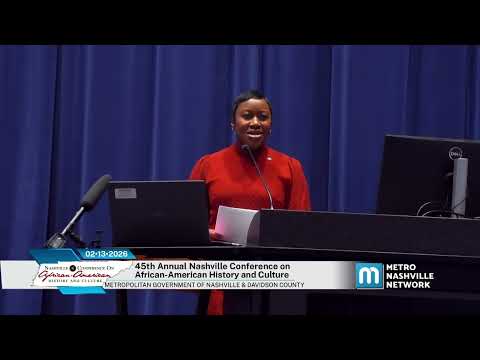
Scarlet Miles, interim director of the Metro Historical Commission, opened the 45th Nashville Conference on African American History and Culture at Tennessee State University and outlined recent MHC work: five new markers, cemetery survey progress, a NPS grant project, and a Nashville sites driving tour.
Scarlet Miles, interim director of the Metro Historical Commission, opened the Nashville Conference on African American History and Culture at Tennessee State Universitys Avon Williams campus and thanked the university and Metro staff for hosting and streaming the event. "I am Scarlet Miles, and I am the interim director of the Metro Historical Commission," she said in her opening remarks.
Miles used the opening to summarize the commissions recent preservation activity, saying the agency installed and dedicated five new historical markers that reflect African American history in Nashville, and that two damaged markers honoring John Lewis were restored to mint condition. She also announced that Haines Heights will be nominated to the National Register of Historic Places later in the spring and noted work to nominate the former Club Baron property on historic Jefferson Street to the Register; she said Register of Deeds Karen Y. Johnson and Metro partners helped support the work.
The interim director described a National Park Service Underrepresented Communities grant that funded research into mid-20th-century districts built for African American Nashvillians displaced by urban renewal and redlining. Miles said the project yielded a summary report on African American cemeteries and that MHC is planning a standalone phase to identify and protect underdocumented burial grounds in Davidson County.
Miles also highlighted new public programs: a Nashville sites driving tour developed with the Nashville Historical Foundation and digital access to a 40-year compilation of conference profiles available on the conference website, www.ncaahc.org. She encouraged continued community engagement and invited attendees to visit vendor tables and the MHC booth for volunteer and program information.
The session set a preservation and community-engagement frame for the days presentations, with organizers stressing that markers, nominations, and outreach are part of a broader effort to recover and interpret local Black history. The conference continued with multiple academic presentations and performances scheduled throughout the day.