Get Full Government Meeting Transcripts, Videos, & Alerts Forever!
Get email alerts on the School Construction topic
No spam. Unsubscribe anytime.
Alleghany County considers committing $7 million to secure $59 million state grant for new high school
Summary
County commissioners and school leaders reviewed plans, debris and financing options for a proposed new high school funded by a $59 million state grant and discussed committing up to $7 million in local support if needed; the board is expected to consider a formal commitment on Aug. 5.
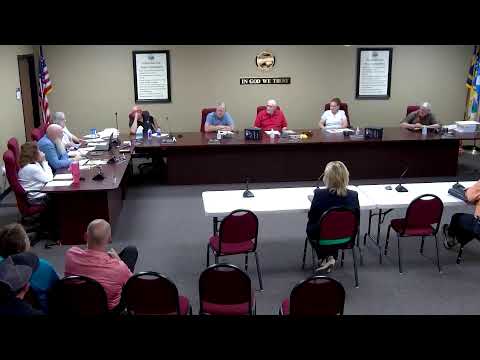
Alleghany County commissioners and school officials met in a joint work session to review plans, costs and financing options for a proposed new high school tied to a $59,000,000 state grant and to discuss whether the county should commit up to $7,000,000 in local funds if needed.
School Superintendent Missy Weaver said the district has documentation for the award and emphasized the timing: "We have been given $59,000,000 ... We don't need the $7,000,000 until year 3," she said, asking only that the county indicate it will back the project when that time arrives. The superintendent and school staff also described recent efforts to trim the bid and finalize reductions to reach the project budget.
Why it matters: accepting the grant and moving ahead would replace an aging high school facility and include large CTE and specialized spaces, but it would also require the county to identify how it would cover a possible $7 million local obligation, the effect of any waiver of tipping fees for demolition debris, and how loan payments or tax impacts would be handled.
County finance staff presented amortization scenarios for borrowing and outlined revenue impacts. Finance staff noted that a penny on the tax rate raises roughly $192,000 and ran examples of 5-, 10- and 15‑year loan schedules at assumed interest rates so commissioners could see monthly payment ranges. April, a county finance official, summarized the amortizations and said the monthly payments vary widely depending on term and amount, information the board said it will review before making a decision.
Operations staff warned about demolition debris and disposal costs. David Sposier of the county transfer facility told commissioners the transfer station charges $75 per ton for construction material and that the county's beneficial fill area is full, limiting the facility's capacity: "We charge contractors $75 a ton," he said, and noted the transfer facility would face operational strain if large volumes were brought without a clear plan for trailers, storage or haulers. Sid Carrier, the school system's facility director, also flagged uncertainty in debris tonnage estimates and relayed a contractor's comment that a demo crew could remove up to "24,000 square feet a day," underscoring logistics challenges.
Staff cautioned that waiving tipping fees or otherwise subsidizing disposal would likely require a subsidy from the county's general fund because the transfer fund's balance is limited and is already budgeted for capital needs.
Project scope and schedule questions were also addressed. Inspection and school staff said the submitted plans are code‑compliant and describe 34 classrooms plus offices, labs, shop space, gymnasium and cafeteria; staff explained that phase 1 would include the cafeteria so students could move into new space before demolition and that utility relocation (a water and sewer line) must occur before major work begins. The town has reviewed plans and said it is willing to assist but needs cost estimates for relocation work.
Legal and timing considerations factored into the discussion. The county attorney advised that a board cannot bind a future board and that, if commissioners want to guarantee funding for a future year, they should secure the financing now (for example by borrowing and placing funds in a designated account) rather than simply pledging support. Commissioners set a goal to address a formal commitment at their Aug. 5 meeting to meet the project's schedule, while asking staff to provide clearer cost options and procurement timelines.
What remains: commissioners expressed broad support for the project's goals but emphasized the need to protect taxpayers—especially those on fixed incomes—and to confirm precise cost, permitting and debris‑management figures before committing. No formal vote or binding commitment was taken at the session; the board asked staff to supply further detail before the August meeting.
The work session adjourned with the board and school officials agreeing to continue refining budgets, bid reductions and logistics ahead of the next commissioners' meeting.