Get Full Government Meeting Transcripts, Videos, & Alerts Forever!
Get email alerts on the Technology Policy topic
No spam. Unsubscribe anytime.
Carson City School District presents first‑reading AI policy to give teachers guardrails and protect student data
Summary
Board heard a first reading of a high‑level generative AI policy intended to give teachers autonomy while creating guardrails for privacy, data security and academic integrity; staff said they will develop operational guidance and return to the board for revisions.
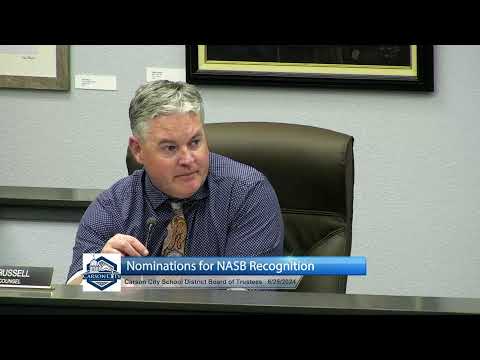
The Carson City School District presented a first reading of a proposed generative‑AI policy at its June 25 meeting aimed at balancing classroom innovation with student privacy and legal safeguards.
Superintendent (district staff) said district leaders and a small internal AI committee drafted a high‑level set of beliefs and guardrails after meetings with families, teachers and the Nevada Department of Education. Raymond Medares demonstrated examples of how the district is evaluating tools and said the policy is intended to "support the teachers in decision making in the classroom" while protecting student data and complying with legal and security obligations.
Cheryl Macy, who served on the district's informal AI committee, told the board that the issues are complex and range from equity and access to privacy, copyright and academic integrity. "AI can be a very powerful tool that can help us all do our jobs better and help students learn better," Macy said, "and it can, if not used responsibly, can take us backwards." She and other staff emphasized the importance of vetting platforms and avoiding personally identifiable information in prompts.
Trustees asked how the district would "police" inappropriate student use. Medares said current AI‑detection software is imperfect and unreliable as a sole indicator of misuse; he recommended relying on monitoring systems, web filters, classroom screen monitoring and low‑tech instructional approaches until detection improves. Macy added that teachers' instructional practices and regular conversations about academic integrity can reduce misuse.
Superintendent staff said they expect to return to the board within a year to revise the draft as the technology and state guidance evolve. The Nevada Department of Education is expected to release statewide guidance; the district will develop more detailed operational guidance and training materials for teachers and administrators to accompany the high‑level policy.
No vote was taken; this was a first reading and informational presentation.