Get Full Government Meeting Transcripts, Videos, & Alerts Forever!
Get email alerts on the Education Programs topic
No spam. Unsubscribe anytime.
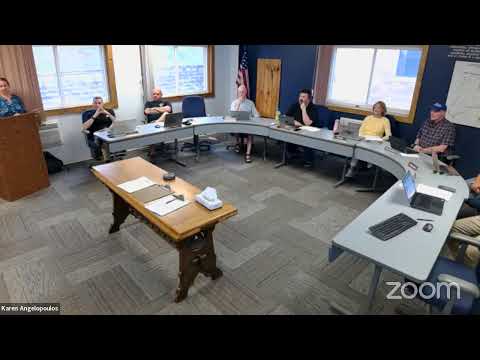
Students present STREAM program and pitch 'Tablelands' working farm to district
Summary
Students in the STREAM Group 2024 told the Lake Placid Central School District about hands-on learning, year-two improvements and a teaser business plan to develop a working farm at the end of Bear Cove Road to support education, workforce training and agritourism.
At a Lake Placid Central School District meeting, students representing the STREAM Group 2024 described a year of hands-on learning and outlined a proposal to develop a small working farm — which they called “Tablelands” — on land at the end of Bear Cove Road.
Christian, a student and presenter for STREAM, summarized the program’s intent. “STREAM stands for science, technology, real world applications, engineering, arts, and mathematics,” he said, adding that the program pairs morning core classes with afternoon, project-based learning because “not all students can learn in a traditional classroom setting.”
Students said year one produced academic gains but exposed operational gaps. Phoenix, a ninth-grade student, said all ninth graders in STREAM passed the Living Environment Regents but that afternoons lacked structure: “There was not enough structure for the afternoon … there was a lot of bad behavior, and there’s no flexible transportation.” The group said staff added a behavior rubric and attendance/effort standards for year two: students must “earn a 3 or better in both effort and academics to be able to participate in the afternoon projects.”
Presenters described multiple community partnerships that support STREAM’s hands-on work. Colin said Peter Buck provided classroom leadership mentoring, while Adam Wild at the Cornell Maple Farm taught students about maple-syrup production and helped donate roughly 2.5 gallons of syrup to the school cafeteria. Students also cited work with North Country School Farms and an equine-health mentor, Erica Burns, and with a youth-center volunteer who helped redesign a garden.
The group presented Tablelands as a potential site-based expansion of those partnerships. A presenter described discussions with the UN Foundation and with the Essex County director of Cornell Cooperative Extension; the director told students the idea “checks all my boxes,” the presenters said. The Tablelands concept would combine youth leadership, education, workforce-skills training, and agritourism, and students said a fuller business plan would be delivered to district leaders later.
Students also identified concrete needs for the program to scale: more reliable transportation to ensure full participation; a sustainable annual budget for trips, materials and community partnerships; additional outdoor clothing and gear to run year-round projects; and consistent team teaching with a STREAM coordinator, teaching assistants and partner mentors.
During a short public Q&A, a community attendee who said they live near the proposed site praised the idea’s potential for students and the neighborhood. Students replied that many of them intend to pursue the skills they practice in STREAM into upper grades.
The presentation closed with the students inviting district staff and board members to follow up for more information and to review the forthcoming business plan for Tablelands.