Get Full Government Meeting Transcripts, Videos, & Alerts Forever!
Get email alerts on the Capital Project topic
No spam. Unsubscribe anytime.
Fredonia board lays out $51M capital plan split into three propositions; residents weigh safety and tax concerns
Summary
The Fredonia Central School District presented a three-part capital project — $22.1M for building repairs, $10M for music spaces, $19.6M for athletics — with administrators saying state aid may cover about 77% of the first proposition; public commenters urged safety upgrades but raised questions about timing and tax messaging.
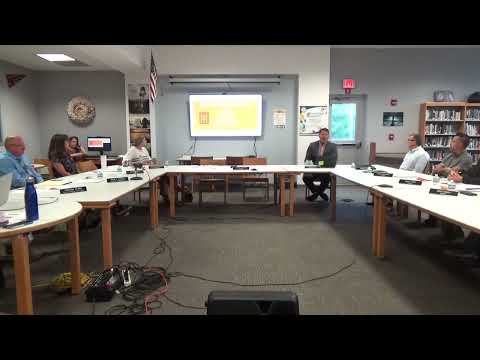
The Fredonia Central School District on Aug. 6 unveiled a three-part capital proposal that would fund building maintenance, larger music instructional spaces and upgraded athletic facilities, and then opened the floor for extensive public comment.
Administrators led by Dr. Zilliox said Proposition 1, focused on ‘‘warm, safe and dry’’ work — roofs, HVAC, electrical and plumbing — is estimated at about $22.1 million and would be the foundation for the other propositions. ‘‘We’re looking to keep everyone warm, safe and dry,’’ Dr. Zilliox said during the presentation. The district expects roughly 77% of that project cost to be covered by state building aid, leaving a local share of about 23%.
Maggie, the district finance presenter, described how the local share would be funded and clarified the tax mechanics the district intends: ‘‘This is a one-time increase’’ built into the 2025–26 tax levy to repay the project over an anticipated 17‑year period, she said. She urged residents to use their tax bill’s assessed-value figure to estimate personal impacts.
Proposition 2 would expand and modernize music spaces within the existing building footprint at up to $10 million, and is contingent on passage of Proposition 1. ‘‘We’ll maximize the space you have by raising the roof and adding windows,’’ the architect said, noting state aid eligibility for much of that work. The district estimated the combined impact of Propositions 1 and 2 at roughly $99 per year for the average home.
Proposition 3 targets athletic facilities: a multipurpose turf field with lights, enlarged parking, improved tennis courts, new bleachers and drainage work to mitigate problems from local clay soil. District staff said the athletics package is less aidable under the state formula and would therefore carry a larger local cost — roughly a 6.9% tax increase for that component, estimated at about $220 per year for the average assessed home, and a combined three‑proposition impact around $320 per year.
Public comment focused on safety, equity and tax communication. Jesse Beers, a longtime Fredonia employee and coach, told the board the fields are ‘‘unsafe’’ and described improvised efforts to make fields playable: ‘‘Our kids are literally playing in cat litter because if we didn’t put that down, then we wouldn’t be playing,’’ he said. Several speakers — including retired educators and parents — urged broader outreach to residents who may not read online notices and asked whether the three propositions could be phased or combined differently.
Several commenters expressed confusion over earlier public discussion of tax impacts. Mark Cunningham said inaccurate reporting early in the outreach left many residents believing the advertised percentage would compound annually. ‘‘Some people thought that was a 10% per year compounding,’’ Cunningham said. District staff reiterated the survey was a straw poll and not the determinant for moving to a public vote; the board said it will continue outreach and revisit proposals at its Aug. 20 meeting.
The presentation included survey results the district described as a strong sample (about 600 respondents) and a range of support percentages shown on slides; district staff will continue community meetings, targeted outreach and environmental work ahead of any potential December vote.
What’s next: The board plans to continue refining the propositions and outreach over the next two weeks, with a working meeting scheduled for Aug. 20 and further environmental/preparatory work if the board decides to move toward a December referendum.