Get Full Government Meeting Transcripts, Videos, & Alerts Forever!
Get email alerts on the Capital Project topic
No spam. Unsubscribe anytime.
Fredonia board confronts capital-project losses, urges fast planning for unsafe fields
Summary
After voters approved only Proposition 1, the Fredonia Central School Board spent the meeting mapping next steps for a $22 million project while grappling with failed Propositions 2 and 3 and facility-safety concerns, including the Orange Bowl football field.
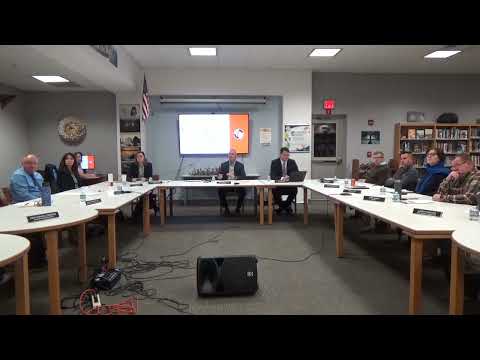
The Fredonia Central School Board spent a large portion of its Jan. 7 meeting responding to the mixed results of a recent capital-project vote, pressing for quick follow-up with architects and a facilities committee to address field-safety and music-suite space needs.
Board members and staff said Proposition 1 — the roughly $22 million maintenance and renovation package — passed while Propositions 2 and 3 did not. Superintendent Dr. Zilloz said the district will continue work with its architects, Young and Wright, and that completed plans will be submitted to New York State for approval before a public bid process.
“Even with Proposition 2 and 3 not passing, Proposition 1 did,” the superintendent said, noting the district will move forward with planning and state review. Board members responded that the failed items leave persistent safety and program-space problems.
One board member called for an immediate, candid reassessment of fields and buildings, saying the district may be “seconds away from a lawsuit” if structural and accessibility issues go unaddressed. The same member urged the board to consider options ranging from closing the Orange Bowl to capping instrumental enrollments in music to manage crowding and safety risks.
Other trustees pushed for clearer, longer-term strategic planning and institutional memory so capital needs are addressed before reserves are depleted. Several speakers reminded the board that state aid had been committed for parts of the project: a board member cited $7.8 million in state aid that would have offset local costs and said the district elected not to provide its local share for all components.
Administrators and trustees agreed on two steps: invite members of the facilities committee to upcoming debriefs with Young and Wright and hold a facilities-committee meeting before the board’s next regular session. The superintendent said those meetings would help clarify options for safe field use, short-term fixes and longer-term capital priorities.
The meeting closed without any new capital action; trustees said the next procedural steps will be architect briefings and committee recommendations.