Get Full Government Meeting Transcripts, Videos, & Alerts Forever!
Get email alerts on the Waste Composting topic
No spam. Unsubscribe anytime.
Eldred students launch composting 'Waste Warriors' with a $10,000 grant from Sullivan 180
Summary
A school-led waste-reduction and composting initiative at Eldred schools is underway after a $10,000 Sullivan 180 grant; presenters shared waste-audit numbers, partnerships with Cornell Cooperative and 4-H, operational hurdles (need for dirt, animal-proofing) and steps to scale composting toward a $75,000 county competition prize.
Students and staff at Eldred schools outlined a hands-on composting program funded by a $10,000 grant from Sullivan 180 and supported by partners including Cornell Cooperative Extension, 4-H and the district Career & Tech program.
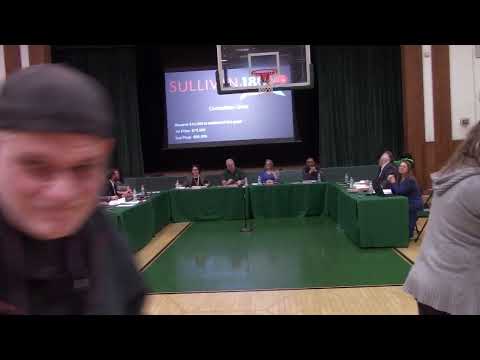
A presenter (S2) described the two-year grant work to reduce the district's waste and educate students. "When I did a waste audit in May... we were putting a little over 4,300 pounds of waste into our dumpsters, with only 60 to 652 pounds being recyclables," the presenter said, providing a visual of that monthly volume. The presenter later described cumulative figures recorded in the board packet: 12,620 pounds of garbage to date, 3,400 pounds diverted from the dumpster, 462 pounds composted, 412 pounds of liquid capture (soups, milk, water), 61 pounds of Nextrex plastics and 94 pounds of compostable trays currently staged in a classroom awaiting full composting.
The program has purchased a scale, sorting buckets and lumber to build a three-bin system. Students from the Career & Tech program drafted the blueprints and helped build the system, and the grant funded shirts and materials to promote student engagement. The presenter identified implementation hurdles: inconsistent student buy-in at sorting stations and the current absence of composting in the school kitchen, which limits the amount of food waste that can be diverted.
Board members queried operational details such as whether the bins are currently closed and how to keep animals away. The presenter said the bins are not yet closed because the team is awaiting a load of dirt to mix with food scraps; mixing in soil reduces the chance animals will be attracted to the compost. A board member offered about three yards of dirt to support the effort, and the presenter said grant funds will also pay for fencing around the primary bin once delivered.
The presenter noted the project is entered in a county competition: first place carries a $75,000 award and second place $50,000; if Eldred wins, the money would be used to expand facilities and programming. The initiative also plans student field trips (possibility to visit the county Department of Sanitation) and classroom partnerships to reinforce recycling and composting practices.
Operational next steps in the meeting included acquiring the soil, installing fencing, and increasing adult supervision at sorting stations to improve student compliance.