Get Full Government Meeting Transcripts, Videos, & Alerts Forever!
Get email alerts on the School Budget topic
No spam. Unsubscribe anytime.
Board hears 2024–25 budget workshop showing $465,004 gap; trustees weigh reserves, substitutes and schedule
Summary
At a March 20 board meeting, district leaders presented a budget workshop that identified a roughly $465,004 projected gap and offered four scenarios to close it, including using reserves, small cuts and restoring anticipated state aid. Trustees debated the value of three building-based substitute positions and agreed to keep options open pending state action.
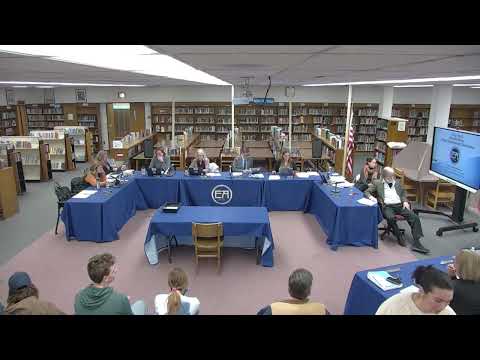
The East Aurora Union Free School District Board of Education on Wednesday heard a detailed budget workshop that showed a projected 2024–25 budget gap of about $465,004.38 and outlined four scenarios to close that shortfall.
In the presentation, the Superintendent said the district's per-pupil spending is "just a hair over 19,000," compared with about $20,000 in Erie County and roughly $26,000 statewide. The superintendent and business staff cited one-time savings from lower-than-expected utilities and moving some special-education services in-house as reasons the district is in a stronger short-term position than in some previous years.
Board members were shown three reserve-and-reduction scenarios and a worst-case plan. The best-case scenario (Option A), staff said, assumes restoration of roughly $180,000 in foundation aid and a 3% minimum increase in state foundation aid; combined with a $200,000 increase in appropriated fund balance, that plan would leave an estimated remaining gap of about $32,000 that could be closed by reducing nonrecurring expenditures. In a less favorable scenario the district could face a shortfall in the low six figures and would need to consider larger appropriations increases, more reserve use, or targeted reductions.
Trustees focused considerable attention on three building-based substitute positions shown on the slides at an estimated $216,510. Several trustees emphasized the instructional and operational advantages of building-based subs, noting that per-diem substitutes could cost an estimated $80,000–$85,000 if they are available but that per-diem availability has been unreliable.
"This is a staff cut. It's an elimination of a program," one committee member said of removing the building-based subs, arguing trustees should treat that option as a last resort. The superintendent responded that bringing some positions that had been grant-funded into the general fund had been a deliberate, multi-year goal and that the administration would work with principals to consider partial or phased approaches.
Transportation costs also factored into the projections: staff said new contract terms and broader market pressures had raised transportation expense projections by roughly $300,000 compared with earlier estimates, a primary driver of the current gap.
Trustees asked staff to prepare more detailed line-item options and to avoid using one-time reserve dollars for recurring expenses if possible. The board tentatively agreed to hold an additional meeting on April 16 (07:30 a.m.) to handle a BOCES vote and to reserve time in mid-April for a more complete budget review if the state budget process does not conclude in time.
Next steps: staff will return with line-item options for closing the remaining gap, additional detail on substitute staffing trade-offs, and a refined recommendation for how much reserve to use vs. what to cut. The board must adopt a final budget in the coming weeks and hold the annual school district budget vote as scheduled; staff said the timeline is tight and contingent on state funding decisions.
(Reporting notes: quotes and numbers are drawn from the March 20 meeting presentation and trustee discussion.)