Get Full Government Meeting Transcripts, Videos, & Alerts Forever!
Get email alerts on the Land Use topic
No spam. Unsubscribe anytime.
Milpitas planning commission approves beer-and-wine sales at 76 station with 50-sq.-ft. display limit
Summary
After public comment raising safety and small-business concerns, the Milpitas Planning Commission approved a conditional use permit allowing beer and wine sales at the 76 gas station at 190 West Calaveras Boulevard. Approval includes existing staff and police conditions and a new 50-square-foot alcohol display-area restriction.
The Milpitas Planning Commission voted on Nov. 19, 2025 to approve a conditional use permit allowing beer-and-wine (ABC Type 20) off-sale at the 76 gas station at 190 West Calaveras Boulevard, adding a 50-square-foot cap on in-store alcohol display space.
Staff recommended the permit after fielding public notice and a departmental review. “The applicant is requesting to allow for the retail sale of beer and wine for off-site consumption consistent with the California Department of Alcoholic Beverage Control Type 20 license,” Randy Baez, associate planner for the City of Milpitas, told commissioners. Baez said no exterior changes are proposed, alcohol sales would be limited to 6 a.m. to 2 a.m., and the Milpitas Police Department recommended conditions including cashier ID scanning, no on-site consumption, and no loitering.
The staff report noted the project site sits in ABC census tract 5045.08 and that the tract currently has two active off-sale licenses, giving the tract an “undue concentration” under ABC rules; staff said the CUP process evaluates whether the proposed use meets the state standard of public convenience or necessity. Baez also said the project is categorically exempt from CEQA under Guidelines sections 15301 and 15183 and that 551 postcards and other notices were sent; staff had received six written opposition comments before the hearing.
Public commenters emphasized two main objections. “As a place that is already kinda over concentrated with a bunch of alcohol-selling businesses, I feel like it's just not that safe of a location anymore,” said student speaker Jovan Saul, adding concerns about drunk-driving near daycares and schools. Owners of nearby SBC Liquors warned the added license would threaten their family business. “If they were able to get their license, it would basically destroy our business,” Jason Singh said; Kevin Sandhu, who also identified himself as an owner at SBC Liquors, echoed that the store could be forced to close.
Applicant representatives described their intent to keep alcohol a secondary offering. Gemma, a permit expediter, introduced Gulfco Enterprises as a family-owned operator; Gulfco’s representative said alcohol would be supplemental and estimated alcohol-related sales would be roughly 10–15% of store revenue. The applicant also volunteered enhanced employee training and merchandising practices intended to reduce safety risks.
Commission debate centered on two regulatory aims: limiting public-safety risks tied to single-serve sales and preventing alcohol from becoming the primary retail purpose of the convenience store. Commissioners discussed a range of possible conditions—minimum container sizes for single-serve sales, percentage-of-sales limits, and square-footage caps for display space. Staff and the city attorney advised that product-specific or brand-based conditions can be hard to draft and enforce, and that a square-footage display limit is administrable.
The commission considered multiple motions. A proposal to approve the permit with two added conditions—a single-serve restriction (single-serve beer under 16 ounces and wine under 350 milliliters prohibited) plus a 50-square-foot display limit—failed. A subsequent motion to adopt the staff recommendation without added conditions resulted in a tie. The final successful motion approved the staff recommendation as set out in Resolution 25-015 (UP25-0005) with one additional condition: alcohol display area shall not exceed 50 square feet. Staff and police conditions in the adopted resolution remain in effect, including the hours-of-sale limitation (6 a.m.–2 a.m.), cashier ID verification, and no exterior signage advertising alcohol sales.
The planning director noted that the police department had asked that there be no exterior signage advertising alcohol sales, which staff said would reduce the likelihood of passersby selecting the site specifically to purchase alcohol. The record shows staff notified property owners within 1,000 feet and posted notice at the site; six written opposition comments were received in addition to the three in-person public speakers.
The commission’s approval is subject to the standard appeal period under Milpitas procedures. The resolution and conditions adopted by the commission will guide how the ABC application is presented to the Department of Alcoholic Beverage Control for final licensing.
Votes at a glance: Resolution 25-015 / CUP UP25-0005 — Approved (majority) with additional condition limiting alcohol display area to 50 square feet; hours and police/staff conditions retained.
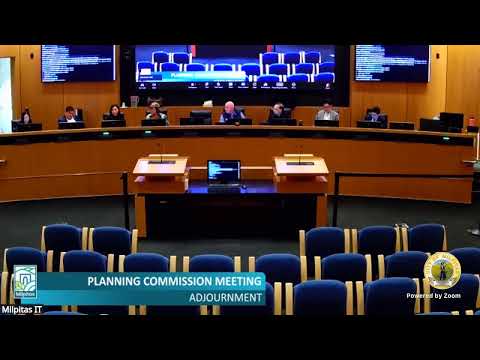
The commission adjourned after reading appeal instructions.