Get Full Government Meeting Transcripts, Videos, & Alerts Forever!
Get email alerts on the Turf Field topic
No spam. Unsubscribe anytime.
Wright Brothers project manager Mike Eagle outlines turf-field plan for Nyssa SD 26
Summary
Wright Brothers project manager Mike Eagle briefed the Nyssa SD 26 board on a proposed turf-field design-build project, recommending an engineered pad under the turf for safety and longevity, noting geotechnical borings are pending and giving a rough timeline for design and installation.
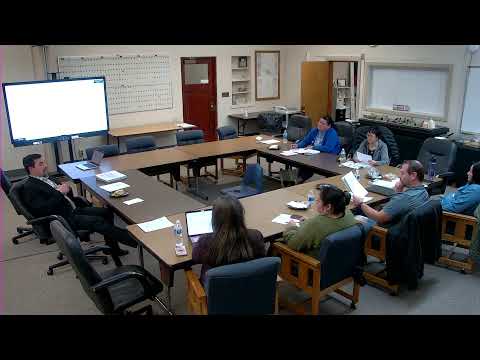
Mike Eagle, a project manager with Wright Brothers, told the Nyssa SD 26 board at its March 3 work session that his company has begun surveying the district’s football field and is preparing to perform geotechnical borings to determine what is under the surface and how much engineering will be required. “We’re well versed…we’ve walked it,” Eagle said, describing the next steps as borings, an engineering design period and then construction.
Eagle said the district must decide soon whether to include a shock-absorbing pad beneath the turf. He described the pad as “as critically as important as the turf” because it stabilizes the field’s G-max safety rating and can protect the district from potential liability. Eagle gave lifecycle estimates: turf typically lasts about 12–15 years with proper maintenance, while a pad can last for two turf life cycles (which he described as roughly 24–30 years), meaning the district might replace turf once while leaving the pad in place for the second replacement.
On warranties and suppliers, Eagle said turf warranties commonly start at about eight years with optional extensions (he referenced a 12‑year option). He recommended buying pad and turf from the same supplier to avoid warranty disputes. He also said Shaw (the turf subcontractor named in the presentation) handles manufacturing, installation and maintenance programs for schools and other clients. Eagle gave a rough schedule: about four weeks for engineering after geotechnical work, roughly 30–40 days lead time to manufacture turf after proofs are approved, and about 25–30 days for on-site pad and turf installation.
Regarding procurement and contract structure, Eagle described the project as a design-build contract that commits the district only to pay for engineering design through each phase; if the geotechnical work shows costs will exceed the district’s budget, the contract permits stopping the project at the design stage without a requirement to complete construction. He summarized that approach as protective of both parties’ interests.
Board members asked about maintenance programs, warranty coverage and whether local contractors are used for subcontracting. Eagle said maintenance can be performed by vendors or trained district crews and recommended annual maintenance to preserve warranties. He addressed several community questions about materials, noting he had not heard of specific local donations (for example, a suggestion that Les Schwab donate infill was not confirmed by Eagle).
Next steps: staff and Eagle said the district will schedule geotechnical borings and continue design work; the board will review the contract and schedule the turf decision for a future meeting.
Quote: “The pad is as important as the turf,” Eagle said. “You can be g‑max tested five minutes before a game and if the field isn’t right and it doesn’t pass, you can’t play it.”
What’s next: Staff will coordinate borings and bring further cost and timeline details to the board for a future decision.