Get Full Government Meeting Transcripts, Videos, & Alerts Forever!
Get email alerts on the Facilities Maintenance topic
No spam. Unsubscribe anytime.
Board hears long list of facility repairs, considers equipment purchases and a 30‑year maintenance plan
Summary
District facilities staff presented results of a building walkthrough that identified leaking sinks, damaged ceiling tiles, rusted handrails and other deferred maintenance. The board debated repairing the forklift versus leasing or buying skid‑steer/backhoe equipment and asked staff for cost estimates and a prioritized 30‑year replacement schedule.
Facilities and maintenance dominated the second half of the meeting as staff reported on immediate fixes, equipment choices and long‑range planning.
Scott, the facilities representative, reviewed an electrician’s recommendation to pull #6 wire and install 60‑amp subpanels for both concession stands and to add a dedicated breaker for the wireless huddle‑camera system; he reported a contractor’s rough estimate of $6,500 to do the work. Scott also outlined field maintenance scheduling, including infield dirt deliveries and a planned maintenance push the week following the meeting.
The board then considered options for replacing or repairing the district forklift (engine repair estimated at $10,000–$15,000) versus acquiring a used forklift ($10,000–$22,000 quoted) or leasing a skid steer or backhoe. Board members and maintenance staff traded technical points about lift stability, frequency of use, snow‑removal efficiency and rental economics; staff were asked to return with lease and purchase options and pricing.
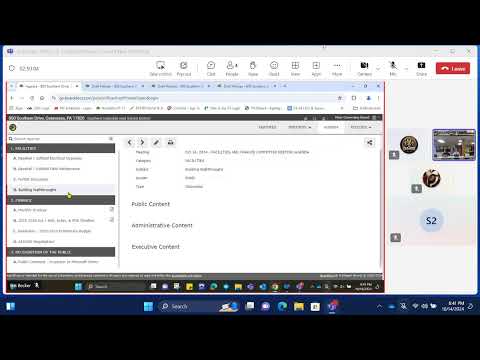
A walkthrough of the elementary school uncovered recurring problems: classroom sinks with leaks and eroded fixtures, ceiling tiles out of place, loose or missing base trim, rusted handrails at exterior landings, and damaged thresholds. Staff said they had photographed the issues and uploaded images to a OneDrive folder shared with the board for prioritization. The board directed staff to schedule additional walkthroughs (high school and middle school) and to prepare a prioritized, budgeted list of repairs and longer‑term capital projects spanning a 30‑year replacement horizon.
No formal capital project approvals were made at the meeting; the board signaled support for prefunding (increasing annual contributions) to build reserves for large future costs such as turf replacement and large facility repairs.