Get Full Government Meeting Transcripts, Videos, & Alerts Forever!
Get email alerts on the State Budget Education topic
No spam. Unsubscribe anytime.
State and federal lawmakers warn of deep education budget squeeze; urge outreach and advocacy
Summary
A panel of state and federal representatives told the Poudre School District board that Colorado faces major budget pressures and discussed school‑finance averaging, adequacy studies, IDEA funding and possible legislative strategies; they urged local advocacy, including letter‑writing campaigns.
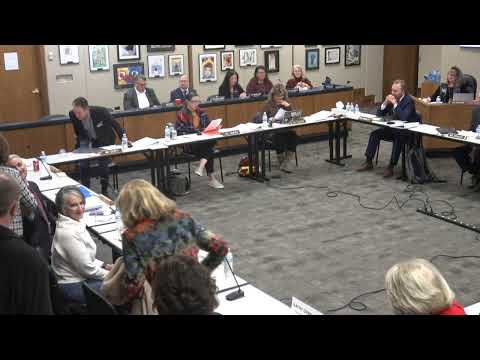
State and federal elected officials told the Poudre School District Board on Nov. 19 that Colorado faces significant education funding challenges and urged local officials and residents to engage lawmaker offices as the 2025 legislative session approaches.
‘‘The budget's in a really bad place for the state. We're looking at cutting over a billion dollars from the state budget,’’ said State Representative and Senator‑elect Kathy Kipp during the legislators’ introductions and priority updates. Several panelists echoed that a large shortfall and changes to the school‑finance formula could force difficult choices in districts across Colorado.
Sen. Janice Marchman, a Larimer‑area senator, noted state bills related to harassment and discrimination and said the Colorado Department of Education was preparing free training to be available by April and expected to be mandatory by next December. Marchman also cited recent legislation (she referenced SB23‑296) as part of the current policy landscape.
Panelists discussed technical but consequential issues in school finance: multi‑year averaging of pupil counts (which smooths funding changes), how concurrent‑enrollment and AP/IB calendars constrain shifting high‑school start dates, and proposals to protect floor‑funded districts. They also raised concerns about mill‑levy equalization and the sustainability of state support for districts and CSI‑authorized schools.
Several legislators urged direct constituent engagement with legislators and committee members; one recommended a coordinated letter‑writing campaign to amplify concerns about preserving K‑12 funding and IDEA supports. Federal staff in the room said they would look into potential funding opportunities and take district narratives back to their offices.
Board members and the superintendent said they will continue coordination with state and federal representatives and consider local advocacy steps the board can take to communicate the district’s funding priorities to constituents and legislators.