Get Full Government Meeting Transcripts, Videos, & Alerts Forever!
Get email alerts on the Future Ready Plan topic
No spam. Unsubscribe anytime.
Pittsburgh school board rejects ‘Future Ready’ resolution after hours of debate over closures and community input
Summary
After extended public comment and board debate, the Pittsburgh Board of Public Education voted down a resolution to adopt the district’s “Future Ready” reconfiguration and authorize permanent school closures (Item 17.01). Attempts to table the item and to adopt a narrower amendment both failed.
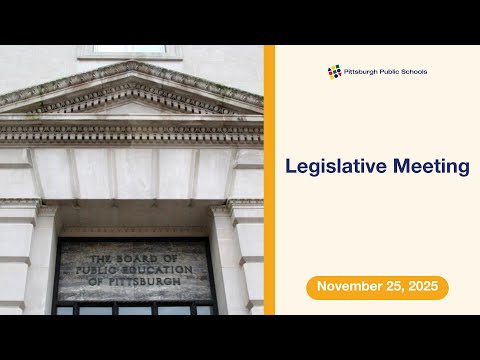
The Pittsburgh Board of Public Education voted 3–6 on Nov. 25 to defeat Resolution 17.01, the district’s proposed “Future Ready” plan that would have authorized permanent closure of certain school buildings and adopted a new district reconfiguration timeline.
Board President Walker introduced the resolution and moved to table it after citing the volume of public comment and the need for more work. "I do not feel confident that we can at this point properly support the superintendent and his team in this work," Walker said, arguing the district needs clearer milestones before moving forward. The motion to table failed on a 4–5 roll call, returning the resolution to the floor.
Director Silk then proposed a narrower amendment that would have kept only four components of the plan and pushed major timeline changes to no sooner than the 2027–28 school year: sunsetting the elementary magnet program, implementing a secondary neighborhood magnet plan, moving the gifted program into homeschools, and standardizing grade-band configurations. Silk urged the board to "say yes to what we can agree on" while reserving other elements for later review. The amendment was seconded but was defeated 2–7 on a roll-call vote.
Supporters of the original plan argued it would expand educational opportunities districtwide and replicate successful programs beyond a handful of schools. "This is a plan for them to have something better across the district and not at only a few schools," a director who backed the resolution said. Opponents and many public commenters pressed for clearer evidence of academic benefits, independent evaluation, and protections for culturally specific programs. Superintendent Walters told the board his understanding was that an African‑centered curriculum recently associated with Miller is not currently implemented districtwide and that the district has shifted toward culturally responsive teaching, funded in part by past grant work.
Student representatives also spoke, telling the board they were confused about implementation details and that more student input was needed. One student said the process felt cyclical and urged concrete implementation plans rather than ongoing revision.
With the amendment and the original resolution both defeated, the board left in place the need for further work and community engagement. The legislative portion of the meeting ended without adopting the Future Ready Plan as presented. Members discussed returning to the issue after the new board is sworn in and after administration staff provide additional detail; no new enactment or closures were authorized at the meeting.
The meeting concluded with brief announcements about district programs, including the Safe Passages kickoff, and adjourned for the evening.