Valley Link presents plan for roughly 150-mile, 765-kV transmission line from Joshua Falls to Yates
Loading...
Summary
Project representatives outlined a proposed roughly 150-mile, 765-kV transmission line from the Joshua Falls substation (Campbell County) to a proposed substation near Yates (Culpeper County), described routing criteria, public outreach and timetable for a State Corporation Commission filing expected in late Q3; Louisa County parcel counts were given for two route options.
Valley Link Transmission Company representatives presented plans for a proposed roughly 150-mile, 765-kilovolt transmission line running from the existing Joshua Falls substation in Campbell County to a proposed new substation near Yates in Culpeper County, saying the project was selected through PJM’s regional transmission planning process as the solution that best meets long-term reliability needs. A project representative said, “This project is being developed by Valley Link Transmission Company.”
The presenters described the 765-kV line as intended to carry bulk power long distances to reinforce the interconnected PJM grid and reduce the need for many intermediate substations. “It’s designed to efficiently deliver bulk power across really long distances,” a presenter said, noting hospitals, schools and businesses rely on the grid’s reliability. The team emphasized the corridor maps shown are conceptual: “Nothing here is final. I wanna emphasize that.”
Project staff described typical engineering and land impacts: the line would use steel lattice towers typically about 135 to 160 feet tall and a typical right-of-way width around 200 feet. The team said it sent mailers to property owners within about a mile of the conceptual route corridors across a nine-county study area stretching from Campbell County north to Culpeper County, and it opened an online interactive map at vltransmission.com for residents to locate nearby route options and submit comments.
Officials said routing begins with extensive desktop data collection—land use, historic and environmental resources, easements and infrastructure—and that those data are combined with engineering review to identify constraint areas and constructible conceptual routes. The presenters said they will iterate on routes, identify a preferred route and alternatives, and file the proposal with the State Corporation Commission (SCC) with a target filing in late Q3 of the year.
During the public question-and-answer session, a community member asked whether power sent from Joshua Falls to Yates would serve a particular local area. A project representative replied that the line brings bulk power into the interconnected PJM grid rather than serving a single customer or narrowly defined load pocket. When asked about farming impacts, presenters said farming is generally compatible with transmission rights-of-way, though easement negotiations define specific limitations and access arrangements.
The team also discussed routing near transit-oriented development (TOD) as a way to minimize the number of affected landowners. For Louisa County specifically, a project representative stated that Route 1 crosses 129 parcels and Route 2 crosses 109 parcels and noted the number of distinct landowners may differ from parcel counts. The presenters said they consider agricultural and forest districts (AFDs) and avoid them where possible, though some crossings may be required when other constraints, such as public lands or easements, limit alternatives.
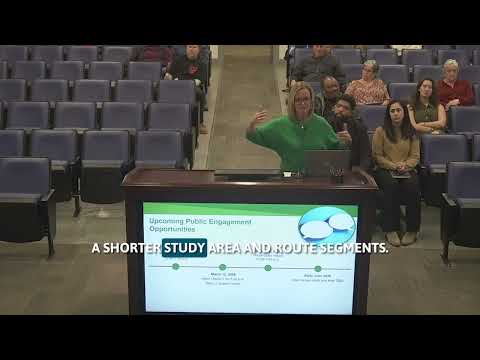
Valley Link officials urged residents to use the project website and public meetings to submit information—particularly local historic or cultural sites that desktop data may not capture—and said they expect to hold a virtual open house on March 16 and additional sessions in early June before finalizing a shorter study area and preferred route. The project team said PJM’s open-window process and subsequent SCC review will determine final routing and approvals.
Next steps listed by presenters: continued outreach and field reconnaissance to supplement desktop data, revision of conceptual routes based on public input, and a planned SCC filing in late Q3. No formal votes or regulatory approvals were recorded during this presentation.