Lifetime Citizen Portal Access — AI Briefings, Alerts & Unlimited Follows
Audit finds documentation and monitoring gaps in DNR’s Outdoor Heritage Fund grants; agency pledges fixes
Loading...
Summary
An OLA performance audit of DNR-administered Outdoor Heritage Fund grants found missing documentation for reimbursements, payments made without progress reports totaling millions, and incomplete or late closeout evaluations; DNR said it is strengthening guidance, training and monitoring procedures and expects corrective actions ahead of the FY27 grant round.
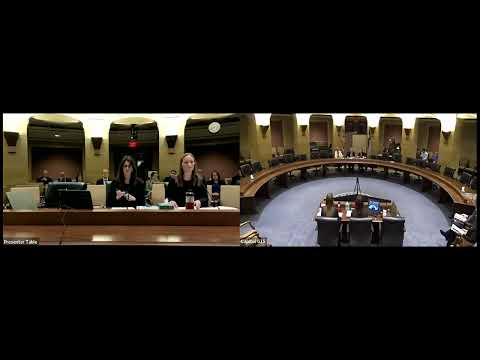
The Office of the Legislative Auditor presented findings that the Department of Natural Resources did not always obtain adequate documentation for some Outdoor Heritage Fund reimbursements and did not complete required monitoring and progress-report reviews for several grants.
"For this audit, our objective was to determine whether the Department of Natural Resources administered Outdoor Heritage Fund grants in compliance with applicable requirements," audit director Ryan Baker said. He summarized that auditors reviewed grant agreements, amendments and payments for 13 grants, made site visits, and tested monitoring and closeout practices.
Baker said auditors identified two findings. For payments, the audit found that invoices for about three grantees (totaling approximately $400,000) lacked sufficient detail to determine whether costs were allowable, and DNR paid about $5,000 to two grantees without obtaining detailed documentation supporting the reimbursements. Baker further said DNR lacked agency-level policies defining what constitutes an allowable cost under the grant programs.
"Finding 1 of the report relates to grant payments, and we found that for 3 grantees totaling approximately $400,000, invoices submitted for reimbursement did not contain enough detail to determine whether the expenses the grantee was requesting reimbursement for were for an allowable cost," Baker said.
On monitoring, auditors reported that DNR did not conduct required annual monitoring visits for four legislative grantees and two single-source grantees. Auditors also found DNR made 10 payments to legislatively named grantees totaling about $2.1 million and 25 payments to three single-source grantees totaling about $2.7 million without current progress reports on file. In closeout reviews, auditors found that eight of 12 closeout evaluations were missing elements required by Office of Grants Management policy, and several closeouts were completed 72–790 days after final payments; two grantees even received subsequent awards before evaluations were complete.
DNR assistant commissioner Bob Meyer acknowledged the concerns and described ongoing continuous improvement work to document monitoring activities and sampling methodologies. "Monitoring is an extremely important part and we do need to make sure we are there," he told the committee.
Mary Robinson, DNR chief financial officer, said the agency agrees it needs stronger documentation before processing reimbursements and will update guidance, internal checklists and training for staff and grantees. She said DNR will develop a grantee checklist on adequate cost documentation, hold annual training webinars for grant staff, and deliver grantee training; Robinson said those corrective actions will be completed before the FY27 grant round. She also said DNR will work with the Lessard Sams Outdoor Heritage Council (LSOHC) to clarify allowable costs.
"We will also develop and deliver annual training webinars to grant staff on the use of our internal payment checklist and what constitutes adequate documentation of costs," Robinson said, adding that DNR has already updated closeout evaluation forms to align with Office of Grants Management guidance.
Committee members pressed DNR on why monitoring shortfalls recur across agencies and expressed frustration that taxpayers’ money can be spent without the documentation auditors expect. Catherine Sherman Hohen, DNR’s agencywide grants manager, told the committee some grantees hold many open grants — she estimated Minnesota Land Trust has 40 or more open grants and The Nature Conservancy upwards of 20 — and that DNR uses an approved sampling methodology, which automatically samples grants in their final year so projects scheduled to receive a final payment receive review.
DNR said it has initiated new grants-management training in FY25, expanded an internal coordinating group for grants administrators, and will review and report on whether the improvements are working as intended. The agency committed to completing corrective actions and improved documentation before another year of funding is granted.
The committee did not vote on any motions; auditors and DNR committed to follow-up reporting and corrective actions.