
Legislative auditors find pay errors and late faculty payments at Minnesota State; university vows fixes
Get AI-powered insights, summaries, and transcripts
Subscribe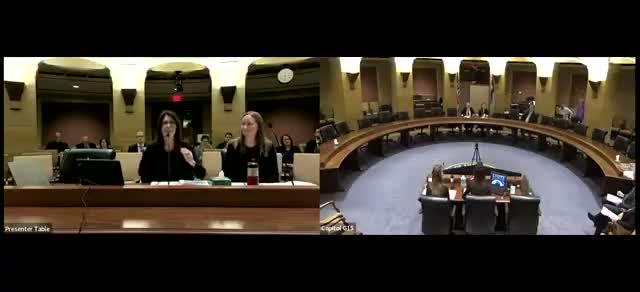
Summary
An OLA performance audit found Minnesota State made inaccurate or late payments to a sampled group of faculty, identifying 57 inaccurate cases totaling about $85,000 and widespread timeliness problems; university officials said they agreed with the findings, have corrected identified discrepancies and are pursuing process and technology fixes.
The Office of the Legislative Auditor told the Legislative Audit Commission subcommittee that its performance audit of Minnesota State’s faculty payroll found instances of inaccurate and untimely payments and recommended the system tighten controls.
"Our conclusion was that Minnesota State generally complied with the criteria we tested. However, we did identify concerns with both the timeliness and accuracy of faculty pay," audit director Kayla Borneman said as she summarized the payroll audit, which covered July 1, 2022, through Dec. 31, 2024.
Borneman said auditors tested a sample population that covered four institutions and noted Minnesota State had roughly $1.5 billion in gross pay to 13,060 faculty during the audit period. The audit initially found 19 of 202 sampled faculty (9%) were inaccurately paid and, after additional testing at the four institutions, identified 38 more, for a total of 57 faculty with inaccurate payments. Auditors estimated the absolute value of the inaccurate payments at about $85,000; individual errors ranged from $10 to almost $16,300.
Auditors attributed inaccuracies to several causes, including manual data-entry mistakes, use of incorrect assignment type codes for out-of-workload projects, and challenges introduced by Workday implementation. Borneman also reported 737 faculty received no or partial pay in the first pay period for fall 2025 assignments, largely because of late approval of assignments.
"For the first finding, we found that Minnesota State inaccurately compensated some faculty members," Borneman said. "For the 57 faculty members who were found to have inaccurate payments, inaccurate payments ranged from $10 to almost $16,300."
Eric Davis, Minnesota State vice chancellor for human resources, told the committee the system agreed with the findings and had corrected the identified discrepancies. "We agreed with the findings from the audit. We don't contest any," Davis said, adding the system notifies affected employees and establishes repayment plans when overpayments occur.
When asked about a cited $16,288 overpayment, Davis said the high error occurred at Morehead when a faculty member’s assignment was changed from full time to part time but the number of credits in the payroll system did not change, so the employee continued to be paid at a full-time rate. "When we discover the overpayments... we notify the member and work with them to authorize a repayment plan to the university," he said.
The auditors also found timeliness problems: among 202 tested faculty, 85 (42%) had at least one instructional assignment paid late. Of those late payments, 46% were paid in the next pay period and the remaining 54% were paid from two pay periods up to a year late. Auditors said the primary cause for late payment was late approval of instructional assignments, often because campuses wait to finalize enrollment and workload approvals until after academic deadlines.
Minnesota State officials described the payroll environment as complex, involving a legacy system (Integrated Statewide Record System), the Workday HR/payroll product, and the state’s semaphore payroll system. Davis said Workday went live for HR on July 1, 2025, but Minnesota State still relies on its legacy system to calculate certain faculty workloads; the university plans a phased student-data deployment and faculty calculation fixes tied to a multi-year schedule that aims for student deployment in 2028.
To address issues, Minnesota State said it has corrected verified discrepancies, communicates expectations about timely approvals with campuses, and launched a continuous quality improvement effort commissioned by the chancellor to refine processes and controls. Davis also offered to compile dashboard data published quarterly since Jan. 1, 2025, and submit it to the committee.
The audit report recommended Minnesota State review and correct errors, accurately record assignment information, approve and compensate faculty on a timely basis, and strengthen internal controls. The committee pressed for additional reporting on post-audit error rates; Minnesota State agreed to provide dashboard data to the committee for review.
The subcommittee did not take formal action during the meeting; auditors and Minnesota State officials said they would follow up with the committee on implementation and monitoring of corrective steps.