
Kootenai County commissioners deny proposal to raise agricultural minimum lot size amid tribal water concerns
Get AI-powered insights, summaries, and transcripts
Sign Up Free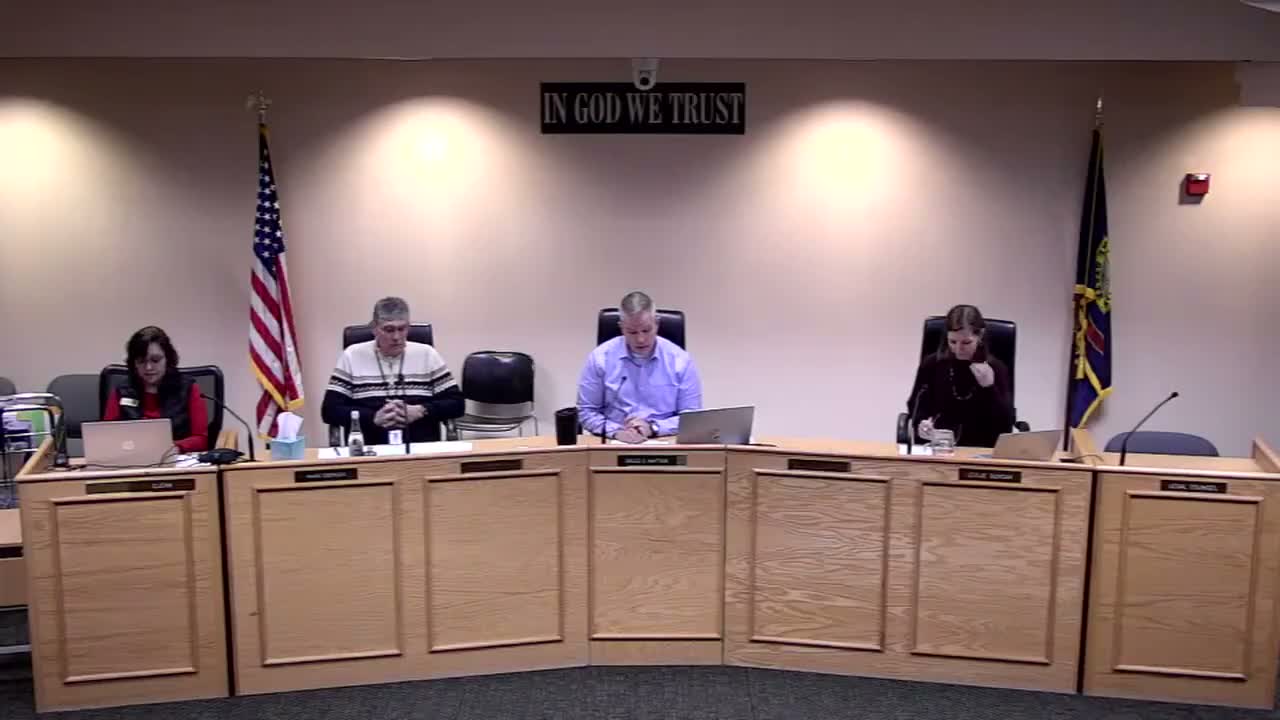
Summary
Kootenai County commissioners voted to deny an interim change that would have raised minimum agricultural lot size to 10 acres at the request of the Coeur d'Alene Tribe, citing insufficient, verifiable water-supply evidence; the tribe had urged the pause to protect groundwater.
Kootenai County commissioners on Feb. 26 denied an interim ordinance (ORA24-0004) that would have raised the minimum lot size in the agricultural zone to 10 acres, a measure the Coeur d'Alene Tribe had urged to protect local groundwater supplies.
The proposal, presented by Community Development Director Mike Beharie and planner Ben Tarbutton, would have aligned the agricultural zone’s minimum lot size with a change already adopted for the rural zone and extended an interim ordinance through June 30, 2027. Tyrell Stevenson, legislative director for the Coeur d'Alene Tribe, told the board the tribe supported the change and described recent local well-drilling problems: “We drilled 4 wells, within a half a mile of city limits. One of them was about 700 feet deep, and it produced 4 gallons a minute... We went down 980 feet and got 2 gallons per minute — a $1,000,000 experiment that failed,” Stevenson said, urging caution while the tribe continues groundwater study.
Why it matters: Commissioners framed the item as a trade-off between property-owner rights and community water resilience. One commissioner said the county should not shorten landowners’ ability to divide property without seeing additional substantive water reports; another argued that property owners have choices, including using storage, and that land-division decisions must follow code standards.
During deliberations, staff noted the proposed change would affect exemptions differently (family divisions and other code exemptions can still create smaller parcels unless the code is changed). The board heard no opposing public testimony at the hearing but discussed the vigor of neighbors’ concerns over observed well declines in the area.
Outcome and next steps: Commissioner [motion recorded in the public record] moved to deny ORA24-0004; the motion carried on a roll call (two ayes, one nay). The denial leaves the agricultural zone minimum unchanged; staff and the tribe may continue groundwater study and public outreach. The board did not adopt an alternative study requirement at this hearing.
Court or statutory references: None cited during the hearing. The interim ordinance as proposed would have carried an expiration date of June 30, 2027.